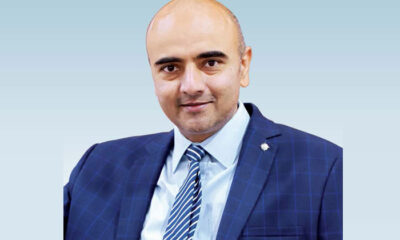
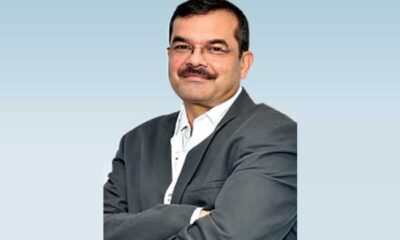
Arun Shukla, President and Director, JK Lakshmi Cement, discusses the company’s strategies for customer engagement and their innovative campaigns to enhance market presence and build a strong, trusted brand.
How crucial is branding for a cement company in today’s competitive landscape?
In the highly competitive cement industry, differentiation is paramount. A robust brand strategy serves as a critical differentiator and as a foundation for trust with clients, helping to establish a distinct identity and secure a durable market presence. At JK Lakshmi Cement, we recognise the vital role of brand building and have committed to it through the consistent delivery of high-quality products and exceptional service, thereby solidifying our reputation as a symbol of reliability and customer satisfaction.
Moreover, we understand that branding in today’s digital landscape goes beyond traditional elements like logos and taglines. It involves forging a genuine emotional connection with our customers. By actively engaging with our audience through digital platforms, we not only share our brand story but also cultivate a vibrant brand community. We believe that effective branding extends beyond mere marketing efforts—it fosters a core company culture. Our employees, empowered as brand ambassadors, embody the values and principles that define JK Lakshmi Cement, reinforcing our brand with every interaction.
How do you maintain consistency in branding across various product lines and markets?
At JK Lakshmi Cement, we have prioritised a unified brand identity across our diverse product portfolio and global markets. Recognising that a consistent brand is crucial for strengthening customer trust, recognition and loyalty, we have established a dedicated brand management team. This team is responsible for developing and enforcing strict brand guidelines that ensure visual and messaging consistency across all platforms and marketing campaigns.
Our integrated marketing approach ensures seamless collaboration among our product, sales and communications teams. This collaboration guarantees that every touchpoint with the customer—whether through advertising, in-store displays, digital channels or direct sales interactions—delivers a unified brand experience. While we maintain a core global identity, we also tailor our marketing and communications efforts to resonate with specific regional needs and preferences, recognising that consistency is not about uniformity but about harmony in diversity.
We view consistency as an ongoing process, continuously reviewing and refining our branding strategies. This includes incorporating customer feedback and market insights to ensure our brand remains relevant, differentiated, and aligned with evolving stakeholder needs.
Has AI changed the way branding is done in organisations?
Artificial intelligence has indeed ushered in a new era of data-driven branding for organisations, transforming traditional methods into more analytical approaches. At JK Lakshmi Cement, AI plays a pivotal role in enhancing our understanding of customer behaviour and preferences. This advanced insight allows us to craft precisely targeted marketing campaigns that resonate deeply with specific audience segments.
Furthermore, AI-enabled tools analyse social media to gauge brand sentiment and trends, significantly informing and improving our marketing strategies and customer engagement efforts. AI also streamlines branding operations by automating routine tasks, thus freeing our marketing teams to focus on high-value activities such as creative development and strategic planning.
Ultimately, AI doesn’t just support our branding operations—it enhances our ability to connect with customers on a more personal and impactful level, ensuring our brand remains dynamic and responsive in today’s fast-evolving marketplace.
What specific strategies do you employ to distinguish your brand from competitors?
JK Lakshmi Cement stands out from the competition through a strategic approach that prioritises both customer needs and sustainability. Our brand value proposition centers on innovative products that deliver exceptional performance. This includes superior strength, durability and a reduced carbon footprint, reflecting our unwavering commitment to environmental responsibility. This dedication to quality is further emphasised by our ISO 9001 and ISO 14001 certifications, ensuring customers receive consistently high-quality products.
Our customer-centric approach is evident in our extensive network of over 5,500 dealers and long-standing customer relationships. This ensures excellent service, timely deliveries, and efficient issue resolution, fostering strong customer loyalty. We further differentiate ourselves through strategic digital marketing and active social media engagement. By sharing our brand story and interacting directly with customers, we build a strong online presence.
Our robust corporate social responsibility (CSR) initiatives in education, healthcare, and community development further solidify our commitment to societal values, enhancing our brand’s trust and loyalty among stakeholders. By integrating these initiatives into our overall strategy, we are able to differentiate ourselves from competitors and build a strong brand reputation.
Have you conducted any market research to evaluate the effectiveness of your branding?
At JK Lakshmi Cement, we prioritise understanding our customers through rigorous market research, including our annual ‘Brand Track’ and ‘Consumer Behaviour and Trends’ studies. We also conduct targeted research after specific campaigns to gain deeper insights. These findings guide our ‘New Product Development’ efforts, ensuring our cement brand remains relevant and responsive to evolving customer needs. Our research consistently highlights the importance of a strong product combined with exceptional service, which we deliver through a robust network of sales representatives, technical experts, and the ability to supply concrete for projects. We provide on-site demonstrations to empower informed decisions and are well-equipped to handle large B2B orders, demonstrating our commitment to serving all customers.
How do you use digital and social media platforms to enhance brand visibility?
At JK Lakshmi Cement, we strategically utilise digital platforms and social media to enhance our brand’s visibility and reach, ensuring robust engagement with our audience. Our comprehensive digital strategy includes maintaining an informative and central hub through our website, which serves as the core of our online presence. On social media platforms like Facebook, Twitter and LinkedIn, we focus on building brand awareness and fostering a community by sharing targeted content that resonates with our followers. Additionally, we employ search engine optimisation (SEO) to improve our visibility in search engine results, making it easier for potential customers to find us when they search for cement-related products or services.
We also collaborate with industry influencers to extend our brand’s reach and create high-quality content that appeals to our target audience. By meticulously tracking the performance of our campaigns through digital analytics, we continuously refine and optimise our strategies, ensuring our digital presence is both effective and engaging. This integrated approach allows JK Lakshmi Cement to maintain a strong and dynamic online presence, driving business success and growth.
Cite examples of successful marketing campaigns or initiatives that have increased your cement brand’s recognition and sales?
At JK Lakshmi Cement, we have built a strong brand through impactful marketing campaigns. Initiatives like ‘Performance Guaranteed’ and ‘India. Ab soch karo buland’ have resonated with our customers, driving both brand recognition and sales growth. These campaigns haven’t just boosted our market share, they have also made JK Lakshmi Cement a household name. This brand awareness allows us to focus on value rather than price competition.
Our green initiatives and focus on corporate social responsibility initiatives have struck a chord with our customers. They appreciate our efforts to address important social issues and minimise our environmental impact. This positive sentiment is reflected in our research, proving that our marketing strategies are not only effective but also align with our values.
How do you address any negative brand perceptions?
At JK Lakshmi Cement, addressing negative brand perceptions or reputation challenges is a priority, particularly in areas such as product quality and environmental impact. Our approach to managing these issues is proactive and multifaceted. When concerns about product quality arise, we utilise customer feedback mechanisms and maintain transparent communication to quickly identify and rectify any problems, thereby fostering trust and loyalty among our customers. In terms of environmental impact, we have implemented robust sustainability initiatives that focus on reducing greenhouse gas emissions, conserving water and enhancing waste recycling.
Open communication channels with all stakeholders, including the media, are crucial for promptly addressing any concerns or misconceptions, further enhancing trust and credibility in our brand. By managing perceptions proactively and prioritising sustainability, JK Lakshmi Cement strives to maintain a positive brand image that reflects our core values and our commitment to environmental and societal well-being.
How do you measure the success of your marketing efforts?
At JK Lakshmi Cement, we measure the success of our marketing efforts through a data-driven approach that includes a comprehensive set of key performance indicators (KPIs). Our primary metrics for assessing marketing effectiveness include brand awareness, customer engagement, sales volume, and market share. We closely monitor the performance of specific campaigns by analysing click-through rates, conversion rates, and return on investment (ROI). Additionally, we utilise customer feedback and sentiment analysis to understand how our brand is perceived and to identify potential areas for improvement. This multi-faceted approach not only provides a holistic view of our marketing impact but also helps us continuously refine our strategies to better align with evolving customer needs. Our commitment to these metrics ensures that our marketing initiatives contribute effectively to sustainable business growth and market share expansion.
– Kanika Mathur