Connect with us

Technology

The Future of Supply Chain

Published

on

Shares

Lalit Das, Founder and CEO, 3SC Solutions, discusses how AI integrated business planning helps deliver an optimised output.

The world has changed at a faster pace, thanks to two prominent technologies: artificial intelligence (AI) and data analytics. It has affected many industries in the post-COVID era. These companies have adopted modern technologies to survive on a larger scale. One such industry that is deeply impacted by the pandemic is the supply chain industry.
Some studies revealed that adopting AI-integrated supply chain management solutions has yielded much better results regarding inventory management, smart manufacturing, dynamic logistic systems and real-time delivery control.
The primary goal of incorporating AI in supply chain management is to increase output in efficiency and productivity. The digitisation of supply chains has made businesses more sustainable.
How AI impacts the supply chain
AI and analytics integrated supply chain management driven by: The use of AI-based solutions means using intelligent machines capable of problem-solving. This process of smart industry manufacturing powered by Internet of Things (IoT) can fully automate things without relying on manual participation.
Furthermore, using machine-generated data and predictive analytics to make end decisions is much more prudent and efficient for businesses. This is possible with instrumented data flowing out of IoT devices. The result is an optimised workflow where large amounts of data help forecast, identify inefficiencies, and drive innovation.
Supply chain analytics is directly linked to predictive, descriptive, prescriptive and cognitive analysis. The cumulative outcome is that a business can mitigate risks and disruptions with complete transparency. They also reduce time and effort while increasing maximum business value. Then, at the consumer end, advanced analytics have the capability to provide better consumer insights, enhancing customer experience and relationships in the supply chain with data received through AI-driven systems that are analysed and executed in reports and dashboards to answer complex questions.
The fact that these technologies have such a significant impact on businesses, to survive, it is pertinent that demand planning (revolutionised by data analytics and machine learning), real-time inventory management (controlled by IoT and connected systems), and end-to-end dynamic margin optimisation within the supply chain industry (driven by AI-based solutions) are infused to make supply chains resilient.

Why you need to invest in AI and analytics-based solutions
Warehouse efficiency:
With warehouse management being a core part of the supply chain, AI-based automation can help smooth transaction of goods from the retrieval of an item to the delivery at the end consumer. AI systems also provide an advantage in significant areas, such as simplifying complex procedures to speed up work. AI automation with machine learning can make faster decisions and save valuable time, ultimately reducing the cost of warehouse staff.
Enhanced safety: The AI-integrated tools come in handy to ensure the safety of warehouse management by ensuring smarter planning and material safety. AI can use data to analyse workplace safety and inform manufacturers about potential risks. It can record stocking parameters, update operations, and necessary feedback for proactive maintenance. This, in turn, helps businesses to formulate strategies to act promptly, keeping warehouses compliant with safety standards.
Reduced operations cost: One more benefit of automation for the supply chain is in the customer service segment; by automating these processes, they work error-free for much longer, reducing human error elements and workplace incidents while increasing productivity. Additionally, warehouse robots can provide greater speed and accuracy, achieving higher levels of productivity – all of which will reflect in reduced operations costs.
On-time delivery: Multiple automated systems work in synergy to accelerate traditional warehouse procedures and help remove bottlenecks with the least effort to achieve delivery targets.
AI and analytics-enabled use cases to control supply chain disruption: Today, businesses need to empower their supply chains with reliable and automated data visual analytics platforms. Mentioned below are practices to control supply chain disruption.
With algorithms and constraints-based modeling, machine learning is leveraged to recognise critical factors in supply chain and transportation data. This is a mathematical approach where a maximum and minimum range of product limits constrains the possibility of each business decision.
This data-rich methodology is the best use case of data science for supply chain forecasts that empower warehouse employees to make more informed decisions on inventory stocking. An alternative method is to take big data predictive analysis that offers deep insight to self-improve forecasting loops.
Today’s supply chain management uses AI solutions to power its inventory optimisation, where the warehouse and stock managers are informed on real-time control of parts, components, and finished goods. As machine learning ages, the AI system produces stocking recommendations based on previous purchase data and supplier deliveries.
Utilising IoT devices, machine learning and AI in the transportation and logistics industry provides an upgrade when it comes to vehicle longevity. It provides real-time insights and predictive maintenance suggestions. AI optimises the logistics and transportation processes by utilising data and improves efficiency. Cost reduction and revenue boosts are other segments that benefit from AI, negotiating shipping rates, analysing supply chain profits, and handling courier contacts in a centralised database. Additionally, AI determines important suppliers who are adding value. It also helps predict supply chain performance indicators and makes the process more transparent.
Ultimately, businesses must stay competitive and future-ready to survive in the market. These tools and services, like supply chain analytics, data visualisation and business intelligence, need to be included for the entire system to function.

ABOUT THE AUTHOR
Lalit Das, Founder and CEO, 3SC Solutions,
is a supply chain veteran with over 25+ years of experience. He has gained expertise in procurement and supply planning, manufacturing execution and production planning, sales and distribution planning, and network design and optimisation. He holds expertise across a variety of industries, including automotive, industrial equipment, electronics and technology products.

Image Source: Claude AI

Economy & Market

RAHSTA Roundtable Sets Agenda for Smarter, Safer Highways

Published

on

By

Shares

Roundtable discussions focus on innovation for safer highways.

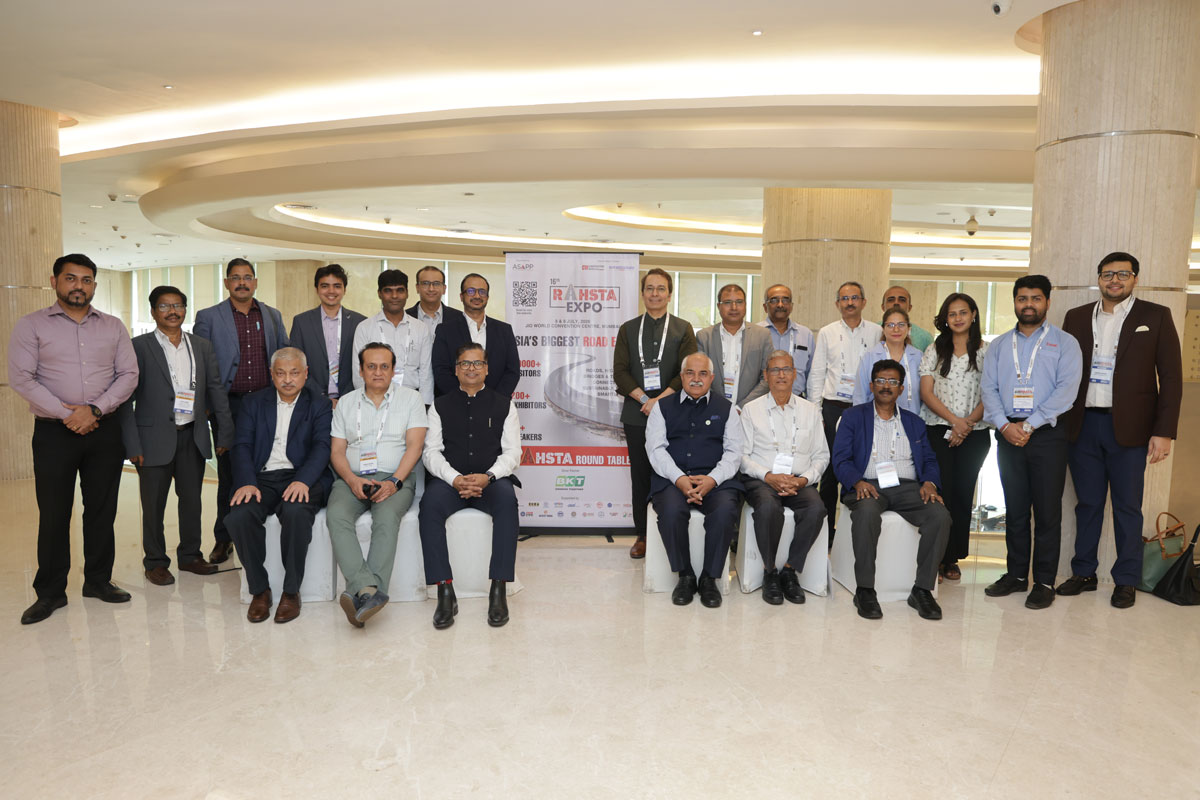
Held on 12 March 2026 at Courtyard by Marriott, Mumbai, alongside the Infrastructure Today Airport Conclave, the RAHSTA Roundtable brought together stakeholders from across the highways and infrastructure ecosystem to shape the agenda for the 16th RAHSTA 2026, scheduled for 8–9 July 2026 at the Jio Convention Centre, Mumbai. The session focused on key industry themes including road construction, technology, safety and long-term sustainability.

Opening the discussion, Pratap Padode, Founder, FIRST Construction Council, said the roundtable marked the beginning of a broader consultative process leading up to the July event. The aim, he noted, is to bring together industry stakeholders to refine the agenda for discussions on the future of roads, bridges, tunnels and allied infrastructure.

Padode noted that while central road project awards have slowed in recent years, states are increasingly driving the next phase of infrastructure growth. Maharashtra, with its long-term road development plans and agencies such as MSRDC and MSIDC, is expected to play a significant role in this expansion.

RAHSTA Expo 2026 as a specialised platform dedicated to road infrastructure, covering highways, tunnels, bridges and flyovers along with construction technologies, safety systems and maintenance solutions. He also highlighted the growing importance of rural connectivity and said the organisers are engaging with government bodies to highlight rural road development initiatives.

Tanveer Padode, CIO, ASAPP Info Group, presented insights from IMPACCT, the group’s infrastructure intelligence platform. He pointed to a strong project pipeline despite slower highway awards earlier in the year, noting that states such as Maharashtra, Odisha and Arunachal Pradesh are emerging as key drivers of new projects. The data also revealed that only a small group of contractors participates in large-value infrastructure bids.

Lt Gen Rajeev Chaudhary, former Director General, Border Roads Organisation and Chairman of the RAHSTA Expo Committee, emphasised the need for stronger collaboration across the ecosystem, including policymakers, contractors, technology providers and financiers. He also called for addressing systemic issues within the sector and encouraged greater participation of women in infrastructure leadership.

The discussion also explored the evolving economics of road development. Phani Prasad Mandalaparthy, Associate Director, CRISIL Intelligence, noted that the slowdown in project awards reflects a shift towards higher-value logistics corridors rather than simple road widening projects. However, private participation through BOT and TOT models remains limited.

From the contractors’ perspective, Sudhir Hoshing, Whole-Time Director, Ceigall, said companies are becoming more selective in bidding, favouring projects with clearer payment mechanisms and efficient processes. While NHAI continues to offer greater operational clarity, states such as Uttar Pradesh and Bihar were cited as relatively supportive environments for project execution.

Durability and sustainability also emerged as key themes. Himanshu Agarwal, COO – Road & Infrastructure, Zydex Group India, highlighted the need to prioritise lifecycle performance and resilient pavements, while participants discussed the potential of alternative materials such as plastic waste, steel slag and industrial by-products in road construction.

Dr LR Manjunatha, Vice President, JSW Cement, emphasised that India has abundant fly ash, slag and other industrial materials that can improve durability and sustainability if integrated into specifications and policy frameworks.

Technology and equipment challenges were also discussed. Dr Lakshmana Rao Mantri, Dy General Manager, Afcons Infrastructure, highlighted the shortage of tunnel boring machines (TBMs), which is delaying several underground infrastructure projects. Participants agreed that developing domestic TBM manufacturing capabilities will be critical for future infrastructure expansion.

The future of concrete pavements was another area of discussion. Dr V Ramachandra, President, Indian Concrete Institute, stressed that the debate should focus on lifecycle performance rather than material choice alone, noting that evolving design standards are improving the feasibility of concrete roads.

Prof Dharamveer Singh of IIT Bombay added that while India has made significant progress in infrastructure development, stronger capacity building and better execution practices are essential to ensure consistent road quality.

The discussion also touched upon technology adoption in the sector. Rushabh Mamania, Partner & CBO, Roadvision, highlighted the growing role of AI in road infrastructure, noting that AI-driven monitoring systems are already being deployed across large stretches of national highways.

Overall, the roundtable underscored that the future of highway infrastructure will depend not only on the pace of construction but also on durability, safety, technology integration and sustainable materials. The discussions offered valuable insights that will help shape the agenda for RAHSTA 2026 and guide future collaboration within the industry.

Continue Reading

Economy & Market

CTS Roundtable Charts Tech-Led Roadmap for Construction

Published

on

By

Shares

CTS Roundtable Maps Technology Roadmap for Construction

Ahead of the Construction Technology Show (Con Tech Show) 2026, industry leaders, technology innovators and academia came together in Mumbai to deliberate on how digitalisation, automation and industrialised construction can reshape the sector. The discussion made one thing clear: construction can no longer afford to treat technology as optional.

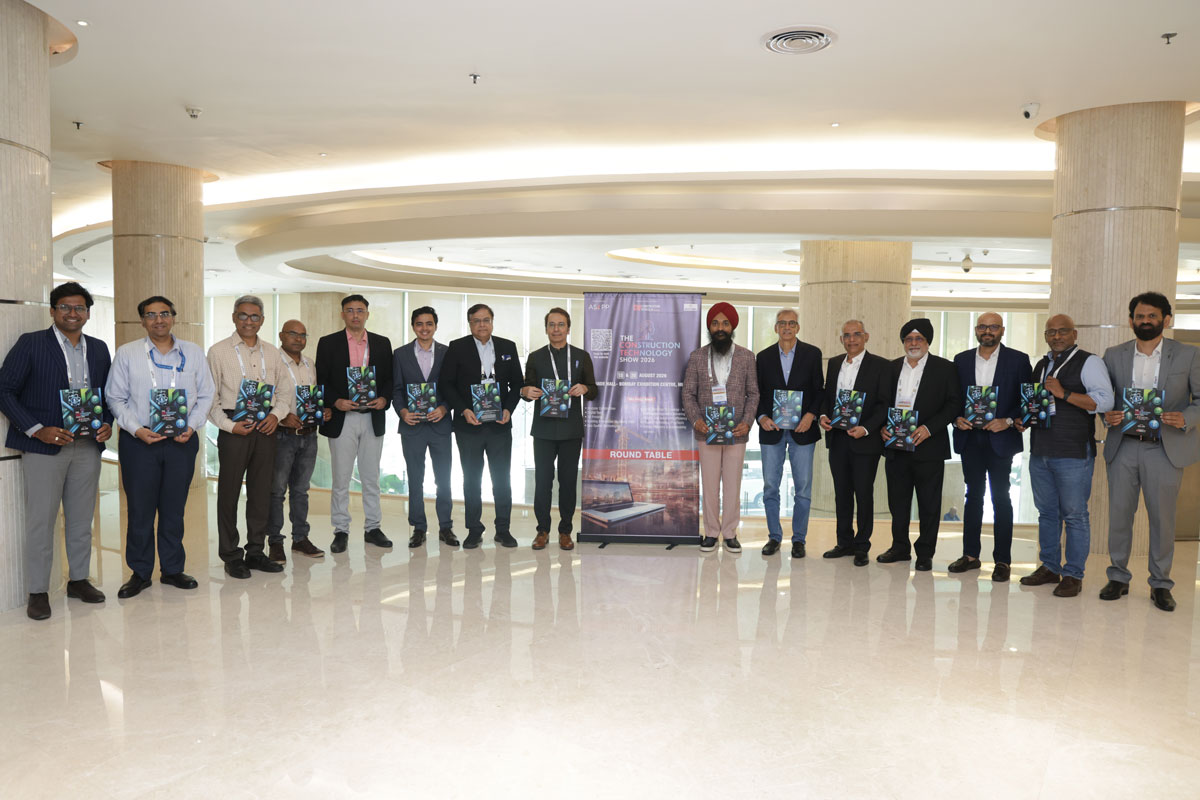
Held on 12 March 2026 at Courtyard by Marriott, Mumbai, alongside the Infrastructure Today Airport Conclave, the CTS Roundtable served as a precursor to the Construction Technology Show 2026, scheduled for 19–20 August 2026 at NESCO, Mumbai.

A platform to move from discussion to deployment

Opening the session, Pratap Padode, Founder and Editor-in-Chief, ASAPP Info Global Group, said construction technology has long remained close to his heart, especially given the sector’s traditionally slow pace of technology adoption. He noted that over the years, the Construction Technology Summit had steadily built interest, and the next step was now to expand it into a larger, more meaningful platform that could bring together technology providers, users, startups and innovators under one roof.

Padode said the vision for CTS is not limited to software alone. The platform aims to embrace all forms of technology that can improve construction efficiency, quality and execution—from digital tools and project management systems to lean construction, off-site fabrication and startup-led innovation. He also highlighted plans to deepen startup participation and create space for young companies to showcase emerging construction solutions.

Industry at a turning point

Moderating the roundtable, Naushad Panjwani, Chairman, Mandarus Partners, set the context by pointing out that the global construction industry, despite being a multi-trillion-dollar sector, continues to lag in productivity. He noted that while manufacturing has consistently improved efficiency, construction has remained slow to modernise.

Referring to both global and Indian trends, Panjwani underlined that the industry is now at a decisive moment. India, he said, is entering a major build cycle, and delivering the next phase of infrastructure and real estate growth through traditional methods alone is no longer viable. The goal of the roundtable, therefore, was not to debate technology in isolation, but to identify the most critical conversations that would bridge the gap between innovation and implementation.

His central message was clear: CTS 2026 must be shaped around themes that make CEOs, CIOs and CTOs feel they cannot afford to miss the event.

From BIM to AI, data to governance

A major theme that emerged through the discussion was the need for better data, better visibility and better decision-making. Dr Venkata Santosh Kumar of IIT Bombay echoed this, saying that the underlying data infrastructure itself needs attention. Construction projects, particularly remote ones, often face issues around connectivity, data collection and data use. Without this foundation, more advanced technologies cannot deliver their full value.

Chandra Vasireddy, CEO & Co-founder, Inncircles, expanded the discussion to governance, arguing that technology must help connect the many moving parts of a construction business. For him, the real value of digital transformation lies in creating better governance, clearer visibility and stronger business outcomes.

Tejas Vara of Inncircles stressed the importance of timely site data for leadership teams, especially in large and remote projects where decisions on materials, machinery and manpower often get delayed because information does not reach headquarters in time.

The role of AI also featured prominently. Rushabh Mamania, Partner and CBO, Roadvision said that while AI and machine learning are now common terms, vision intelligence and language intelligence have still not deeply penetrated the construction sector. He emphasised that startups in India are building relevant AI-led solutions and are already attracting international interest, showing that innovation need not be imported—it can be built locally and scaled globally.

Industrialised construction gains ground

The roundtable also placed strong emphasis on industrialised construction methods. Kalyan Vaidyanathan, CTO – Construction & R&D, Tvasta, called for greater focus on off-site fabrication and the broader industrialisation of construction. Bhargav Jog, General Manager, Dextra, highlighted precast technology and alternative sustainable materials as areas with immediate relevance.

Several participants agreed that modular, precast and pre-engineered approaches are no longer niche ideas. They are increasingly becoming practical responses to the sector’s challenges around labour shortage, timelines, quality control and predictability.

Anup Mathew, Sr VP & Business Head, Godrej, argued that the industry needs a fully integrated approach—from design and procurement to execution and asset management. Unless these are connected, technology adoption will remain fragmented and sub-optimal. He pointed to pre-engineered and modular systems as examples of how industrial thinking can compress timelines, improve quality and reduce dependence on difficult on-site conditions.

Adoption remains the biggest hurdle

While there was broad agreement on the promise of technology, the discussion repeatedly returned to one fundamental challenge: adoption.

Abhishek Kumar, COO, LivSYT, observed that the market is crowded with solutions, but many buyers still struggle to evaluate which technology suits which use case. According to him, the industry needs clearer frameworks to help users select, compare and adopt solutions, rather than expecting a single platform to solve every problem.

Dr Tenepalli JaiSai, Associate Professor, School of Construction(SoC), NICMAR University, noted that isolated technologies will not solve the productivity problem by themselves. What is required is an integrated Construction 4.0 approach, where digital, physical and cyber-physical systems work together rather than in silos.

That concern around silos was reinforced by Subodh Dixit, former Director, Shapoorji Pallonji, who said the issue is not just that technologies are disconnected, but that stakeholders are as well. Clients, consultants, contractors and partners often operate with different priorities. Unless these silos are broken, technology will struggle to percolate across the full project value chain.

Harleen Oberoi, Project Management, Tata Realty shared a practical perspective from the client side, saying that successful BIM implementation requires investment across the ecosystem, not just within one organisation. Trade partners, vendors and other stakeholders must also be trained and aligned if the technology is to deliver its intended results.

Beyond buzzwords

A notable takeaway from the session was that the industry is moving past the phase of treating technology as a buzzword. Participants repeatedly stressed that the real question is not whether technology should be used, but where it creates measurable value and how that value can be scaled.

The conversation also expanded beyond mainstream themes to include repairs and rehabilitation, construction and demolition waste, sustainability, circular economy, green sourcing, carbon measurement, design interoperability, generative design, robotics, and the role of horticulture and greener built environments.

Setting the agenda for CTS 2026

By the close of the session, the roundtable had surfaced a strong set of themes for the upcoming show: BIM and digital twins, AI and data platforms, industrialised construction, startup innovation, governance-led technology adoption, robotics, sustainable materials, and integrated project delivery.

More importantly, the session established CTS 2026 as more than an exhibition. It is shaping up to be a serious industry platform where users, technology providers, researchers and policymakers can collectively define the future of construction.

As Padode noted in his closing remarks, the conversation will continue through further consultations and possibly webinars in the run-up to the show. If the roundtable is any indication, CTS 2026 will aim not merely to showcase technology, but to push the industry towards meaningful adoption at scale.


Continue Reading

Concrete

Human Factor in Grinding Optimisation

Published

on

By

Shares

Ponnusamy Sampathkumar, Consultant – Process Optimisation and Training, discusses the role of skilled operators as the decisive link between advanced additives, digital control and world-class mill performance.

The industry always tries to reduce the number of operators in the Centre Control Room. (CCR) Though the concept was succeeded to certain extent, still we need a skilled person in the CCR.
In an era where artificial intelligence (AI) grinding aids, performance enhancers, and digital optimisation tools are becoming increasingly sophisticated, it’s tempting to believe that chemistry alone can solve the challenges of mill efficiency. Yet plants that consistently outperform their peers share one common trait: highly skilled operators who understand the mill as a living system, not just a machine.
Additives can improve flowability, reduce agglomeration, and enhance separator efficiency, but they cannot replace the nuanced judgement that comes from experience. Grinding is a dynamic process influenced by raw material variability, moisture, liner wear, ball charge distribution, ventilation, and separator loading. No additive can fully compensate for poor control of these fundamentals.

Operators see what additives cannot
When I joined the cement industry in 1981, not much modernisation was available then. Mostly the equipment was run from the local panel. Once I was visiting the cement mills section. The cement mills were water sprayed over the shell to reduce the temperature to avoid the gypsum disintegration.
The operator stopped the feeding for one of the mills. When I asked the reason, he replied that mill was getting jammed, and he added that he could understand the mill condition by its sound. I also learned that and it was useful throughout my career. In another plant I saw the ‘Electronic Ear,’ which checked the sound of the mill and the signal was looped with feed control!
Whatever modernisation we achieve, it is from the human factor that the development starts.
Additives respond to conditions; operators interpret them.
A skilled operator can detect subtle shifts, like a change in mill sound, a slight variation in circulating load, or a drift in separator cut point. It’s long before instrumentation flags a problem. These micro-observations often prevent major efficiency losses.
Additives work best when the process is stable
I would like to share one real time incident. The mill was running on auto mode looped with the mill outlet bucket elevator kilowatt. (KW)There was a decrease in the KW, and the mill feed was increased by the auto control (PID). After a while, the operator stopped both the feed and the mill. He asked the local operator to check the airslide between mill outlet and the elevator. They found the airslide was jammed and no material flow to the elevator!
The operator deduced the abnormality by his experience by seeing the conditions and the rate of increase of the feed by the auto control.
It’s always the human factor that adds value to the optimisation.

Grinding aids are multipliers,
not magicians.
They deliver maximum benefit only when:
• Mill ventilation is correct
• Ball charge is balanced
• Feed moisture is controlled
• Separator speed and loading are improved
• Blaine targets are realistic
Without these fundamentals, even advanced additives may become costly investments. The operator is responsible for ensuring process stability, whether using a ball mill or a vertical mill. After ensuring the system is stable, the operator observes it briefly before transitioning to automatic control. If there is any anomaly in the system the operator at once takes control of the system, stabilises and bring back to auto control.

Skilled operators adapt in real time
It will be interesting to note that the operators who operate from local panel start to operate from DCS also. They have the experience and the ability to adapt the changes. Operator checks each parameter deeply. Any meagre change in the parameters is also visible to him.
Raw materials change. Weather changes. Wear patterns change.
A skilled operator adjusts:
• Feed rate
• Water injection
• Separator speed
• Grinding pressure (in VRMs)
• Mill load distribution.
These adjustments require intuition built from years of experience, something no additive can replicate.

Human insight prevents over reliance on additives
Plants sometimes increase additive dosage to mask deeper issues like:
• Poor clinker quality
• Inadequate drying capacity
• Incorrect ball gradation
• High residue due to worn separator internals.


A knowledgeable operator finds root causes instead of chasing temporary chemical fixes.
The real optimisation sweet spot is reached when:
• Operators understand how additives interact with their specific mill.
• Additive suppliers collaborate with plant teams.
• Process data is interpreted by humans who know the mill’s behaviour.
This constructive collaboration consistently delivers:
• Lower kWh/t
• Higher throughput
• Better product consistency
• Optimum standard deviation.

Advanced additives are powerful tools, but they are not substitutes for human ability. Grinding optimisation is ultimately a human driven discipline, where skilled operators make the difference between average performance and world class efficiency. Additives enhance the process but operators
control it.

About the author:
Ponnusamy Sampathkumar, Consultant – Process Optimisation and Training, is a seasoned cement process consultant with 43+ years of global experience in plant operations, process optimisation, refractory management, safety systems and training multicultural teams across international cement plants.

Continue Reading

Trending News

SUBSCRIBE TO THE NEWSLETTER


Don't miss out on valuable insights and opportunities to connect with like minded professionals.


    This will close in 0 seconds