Product development
Dimensions in Construction and Maintenance of Rigid Pavements
Published
4 years agoon
By
admin
Satander Kumar, Scientist (Retd.), Central Road Research Institute, emphasises on the importance of rigid pavements.The main concrete roadwork for city roads was started in Mumbai in 1924. Marine Drive was constructed in 1938-1939 using semi mechanised methods and was laid on reclaimed soil in coastal area and the road is still performing well in certain locations after nearly 63 years of service despite unfavourable environmental conditions. Later, concrete roads were constructed in Shivaji Park Area in 1943.The use of paver requires huge quantity of concrete, as the speed of the paver is about 1m/minute. The quantity required is very difficult to reach because of congestion and heavy traffic and also more space is required for keeping the machineries on the congested roads. Therefore, it is difficult to use paver for construction of concrete roads mainly in the cities. Further, concrete road work is in progress using semi mechanised methods and fixed form pavers at many places like Mumbai, Pune, Thane, Delhi, Bangalore, Goa, Nagpur, Chanderpur, Noida, Dadri, Rohtak, Jhajar, Chandigarh, Shimla. At present cost of rigid pavement and flexible pavement is at par for very heavy traffic roads for National Highways. Most of the National Highway pavement are being constructed with slipform pavers/mechanised pavers. For toll roads, rigid pavement is preferred and is being adopted. At certain location, semi-mechanised in place of slipform pavers is also being used in Highways near structures or for full depth repair etc.Many of our airfield pavements have been made with as rigid pavement especially at the apron and runway ends. In India, first mechanised road was for two additional lanes for 56 km long stretch of Delhi Mathura road -major concrete pavement project sponsored by MOSRTH during 1993-1994 executed by IRCON/UP PWD and Haryana PWD. Rigid pavement under NHDP programme is approximately 1680 km (equivalent two lanes) sponsored by NHAI in NH-2 and NH-60 in 2004-2005. The Mumbai Pune Expressway is the first international-standard six lane expressway constructed in India and that too in concrete. 8 lakh cu m of Pavement Quality Concrete (PQC) and three lakh cu m of DLC was produced for making rigid pavements. Next rigid pavement in the expressway was, Yamuna Expressway. Flexible pavement was adopted only in marshy regions.On deck slab, 15 mm mastic with 50 mm BC on the top in two layers was laid. Presently white topping (ie. Rigid pavement over flexible pavement) and paver block technology is being adopted in many states.Need and advantagesAdoption of cement concrete pavement is satisfactory in certain locations such as parking areas, heavy traffic roads, National Highways, urban roads, aprons, ends of the runways (Airfield), under passes, steep terrains, low lying areas, because of its low life cycle cost, and long term durability/serviceability. Cement concrete pavement had been considered as good potential and cost-effective as these hav; longer design life, lower maintenance cost, good performance and provides reduced vehicle operational cost.Reinforced cement concrete (RCC) is suitable at steep terrains, on very low bearing capacity soils, where length/breadth ratio of PQC panel is more than 1.5, in case of full depth repair, for better riding quality with lesser no. of joints, where there is likely chances of cracking, to minimise reflection or sympathetic cracking. Recent activities in this field are white topping and ultra thin white topping, self Compacted Concrete pavement, high performance concrete pavement, recycling of rigid pavements/flexible pavement as base, composite pavements, pre-stressed rigid pavement, early opening to traffic rigid pavement (traffic can be opened in 3-6 hours.Innovation in flyash One of the most problematic solid industrial wastes posing serious problem is the fly ash from thermal power stations. Coal based thermal power stations have been set up in large numbers to meet the increasing energy demand. In a thermal power station, two types of ashes are produced from burning a coal. Lighter fraction goes up the chimney and is caught by electrostatic precipitator (ESP). This is known as fly ash (Passing 45 micron). This is used for making blended cement. The other fraction containing coarser material collected at the bottom of the furnace is called bottom ash (of size 1 mm or less). This non plastic fly ash had been used in one of the layers of high embankments. About 80 per cent of the total ash produced is fly ash. In the wet disposal system, which is being followed by most of the power stations in our country, both fly ash and bottom ash are mixed with water and pumped into artificial lagoons. This combined ash is known as pond ash. Combined ash or bottom ash has also been used as soil replacement in high embankments in India on heavy traffic roads and a minimum cover of good earth of 1 m had been provided as the fly ash used is non plastic. Processing of fly ash and High volume fly ash concrete, Self compacted concrete, use of fly ash with silica fume in concrete are best innovation in fly ash.Innovation in flyash in concreteFlyash in the blended cement improves characteristics of plastic concrete. Briefly, flyash in blended cement usage also results in reduced mixing water, improved workability, pumpability and finishing,reduced bleeding, better appearance during night and better in high strength FRC for making ultra thin whitetopping.It has been observed that flexural strength of the fly ash admixed concrete (which is basic requirement of rigid pavement on which its design depends) is improved much as comparative to compressive strength. 90 days or 365 days strength is much more than OPC concrete without fly ash.Recently, Portland Pozzolana Cement (PPC) Gr.I, (Fly ash Based) has been now used for making concrete pavement. "Code of Practice for Plain and Reinforced Concrete". Use of blended cement is to minimise environment pollution. M40 Grade concrete or higher required for PQC, either 43 or 53 grade of cement is considered more feasible containing fly ash up to maximum 25 per cent as per IRC 15. Innovation superplasticiser High Range Water Reducing Admixtures/poly carboxylic based super plasticizers further influence the strength of cement-aggregate bond. For making concrete using fly ash/silica fume very low water/cement ratio is required but at the same time concrete should be workable. This workability is achieved by the use of high range water reducing admixtures (superplasticizers).Normally sulphonated melamine formaldehyde condensate and sulphonated naphthalene formaldehyde condensate are used as high range water reducing admixtures. Especially where very high fineness materials such as fly ash or silica fume collected from electrostatic precipitator (ESP), are used it is essential to use super plasticizers ( poly carboxylic ether based) in the concrete as per IS 9103-1999. Use of plasticizers along with slight content of air entraining agent also produces very good finish of concrete and gives very uniform cohesive mix.Innovation-fibre reinforced Fibres are now being used in paving concrete. However, polymeric fibres also have been used in concrete at toll plaza. Fibre not only increases the flexural strength but also post cracking ductility of concrete is increased. Fibres may be used to improve the toughness of concrete also and also improves the impact strength and inherent flexural strength. Fibre, silica fume and fly ash admixed concrete behaves better in poor shaped panels where some time specified L/B ratio is difficult to maintain and to minimise plastic shrinkage cracks and where tie/bars are also not used. Innovation using blended cement Blended cements have now been recommended by IRC in not only roads, but also in bridges. Following are some of the innovation and special properties of blended cements:• PPC contains less per cent age of Ordinary Portland Cement as compared to Pure OPC. It may contain 10-35 per cent fly ash.• In PPC therefore there is likely delay in setting and hardening and may take more time in winters, and also gives better results in the tropical environment.• In case of OPC, joint cutting may not have any problem in winter, however in summer due to rapid setting it is difficult to manage joint cutting in the stipulated time, joints are cut in stages/alternate initially.• Reverse is the case with PPC, as in winter it is difficult to cut joint even with in 24 hours and this may cause transverse cracking.• Because of slow setting and with light movement of traffic; texture depth in localised areas may be affected early. Use of silica fume/ 53 grade OPC along with polymeric or steel fibres may resolve this problem. Curing time is increased by two or more days as compared to OPC concrete.Rigid pavement at toll plazaVehicles are required to decelerate while entering the toll lane, stop for payment and then accelerate and merge in the main line traffic of the highways/expressways. All these operation of vehicles at toll Ppaza are prone to oil/POL spillage on the surface, which may have cut-back action on bituminous surface. Therefore, concrete pavement or rigid pavement or white topping payment would be preferred in the toll plaza area including tapering zone from durability and long term serviceability consideration. The minimum grade of concrete shall be M 10 at 7 days for dry lean concrete (DLC) as per IRC: SP 49. The minimum grade of concrete for PQC shall be M 40 and minimum flexural strength or modulus of rupture shall be 4.5 mpa. Use of stabilised sub grade, sub base, bases with cementitious soil stabiliser such as innovative and patented RBI Grade 81 or equivalent will produce long lasting pavement like in China, mostly stabilised layers are being used for making roads. Crusher dust or stone dust conforming to fine aggregate shall not be more than 20 per cent in case of pavement quality concrete (PQC) and in dry lean concrete (DLC) to the extent of 100 per cent crusher dust as an alternate to river sand or natural may be used. To make the concrete more ductile, fibres in high strength concrete i.e M40 and above were added in PQC at toll plaza up to 25 m length. Use of fibres- Irc 15-2011Fibers were used as provision in the design to reduce the shrinkage cracking and post-cracking. The fibers may be steel fiber as per IRC: SP: 46 or polymeric Synthetic Fibers (e.g. polypropylene, polyester, polyethylene, nylon).Innovative solutions in design of the rigid pavementThe stage construction shall not be permitted in case of rigid pavement. The new rigid pavement shall be designed in accordance with IRC 58. The existing rigid pavement may be rehabilitated either by rigid or flexible over layers. In place of alone sub grade CBR, is considered taking effect of embankment CBR. Minimum CBR is 8 per cent and in flexible pavement minimum CBR is 5 per cent. For widening and extending rigid pavement with flexible and vice versa, rigid with rigid, proper key/stepping of the existing with rigid may be carried out as per IRC: 15-2010. The DLC shall be extending beyond the PQC (including that in paved shoulder, if any) by 1 m on either side with a camber of 1.6 to 2 per cent. A properly designed drainage layer (GSB) of thickness 150- 200 mm shall be provided using motor grader and rollers with permeability of 20 m/day.The density of sub grade shall not be less than 1.75 kg/cubic cm. The thickness of subgrade shall be minimum 500 mm with a camber of 3 per cent. Each layer to be compacted shall not be more than 200 mm. Reasons of crackingHeat development in cement-rich concretes can result in high internal temperature stresses. Thus, consideration is given to minimising thermal gradients which result in cracking which will reduce the life and performance of concrete pavement by adding fly ash or making high volume fly ash concrete for pavements. When high-strength concrete is used in floor slabs, plastic shrinkage cracks may result when just after construction there is a loss of water 1 kg/sq m/ hour. The primary cause for these plastic shrinkage cracks for freshly placed slabs is very rapid loss of moisture from the concrete caused by low relative humidity, low water content per cubic meter of concrete, high wind and high temperature differential in concrete. Pavement performance indicators The roughness as measured in each lane with 5th wheel bump indicator (BI) shall not be less than 2000 mm/km. No cracks of thickness more than 0.3 mm other than shrinkage cracks are permitted. Other distress shall not be more than as specified in IRCSP:83. Total length of cracks shall not be more than 2000 mm and individual crack shall not be more than 1000mm in a normal panel (4.5 mX 3.5 m) of concrete road. Also,Rigid pavements shall be provided with surface and subsurface drainage system so that all the storm water is drained off efficiently and stagnation of water takes place at any areas. Adequate water supply during construction shall be provided. Maintenance of WhitetoppingBroken edges shall be shaped neatly with a vertical cut with chisels/joint cutting machine into the shape of rectangle. Small pneumatic chisels also may be used, provided the cutting depth can be controlled. The depth of the cut shall be the minimum to affect repair. After shaping the spalled area, it shall be cleaned and primed all sides vertical and bottom. The epoxy mortar/concrete is then applied using hand tools like trowels, straight edges, brushes etc. The repaired edge shall be in line with the joint groove and shall be flush with the concrete slabs. During the repair work, any damage noticed to the joint sealant shall be made good by raking out the affected portion and resealing. Low viscosity epoxy resins shall be used for sealing fine cracks with injection/pouring and also sealing the sides of repaired patch to make it monolithic.Economical rigid pavementThe cost of rigid pavement can be reduced/controlled in certain cases by adopting design of rigid pavement for 90 days, closer joint spacing in PQC, use of local material – flyash, slag, marginal materials, roller compacted concrete pavement (RCCP) where riding quality upto 3000 mm/km may be accepted like in parking bay, use of Hot sealant, Use of tie bars at butt type only, Undowelled joints/untied joints, making of joints with T beam Conclusion Based on the current practices being adopted, conclusions that can be derived are; the grade of PQC M40 or more than is essential for abrasion resistance and structural consideratio. Use of polypropylene fibre as per IRC 44 and foaming agent for initial curing, may be used to minimise plastic shrinkage cracks which are due to high wind speed or high ambient temperature very low relative humidity. These cracks will occur, when rate of evaporation of water is more than 1 kg/sq m /hour from top PQC surface as per IRC 15. The ability to control the size and amounts of cracks will also lead to improved durability by the use of fibre reinforced concrete or by stabilisation of subgrade or sub base with cementitious soil stabilisers accredited by IRC. In PQC panel, where ratio of length/width of the panel is more than 1.5, nominal reinforcement of 12 mm deformed bars of Fe 500 as per IS 1786 at 150 mm c/c, with 50 mm cover placed 50 mm down from top or 50 mm up from the bottom of slab.• There is innovation in slip form paver in which DLC and PQC can be laid simultaneously besides intelligent rollers which can measure density also. • Cone crusher/vertical shaft impactor/ aggregate washing plant in aggregate field and 240 cu/hr batching plant with inbuilt ice plant.
You may like
Economy & Market
Power Build’s Core Gear Series
Published
8 hours agoon
February 19, 2026By
admin
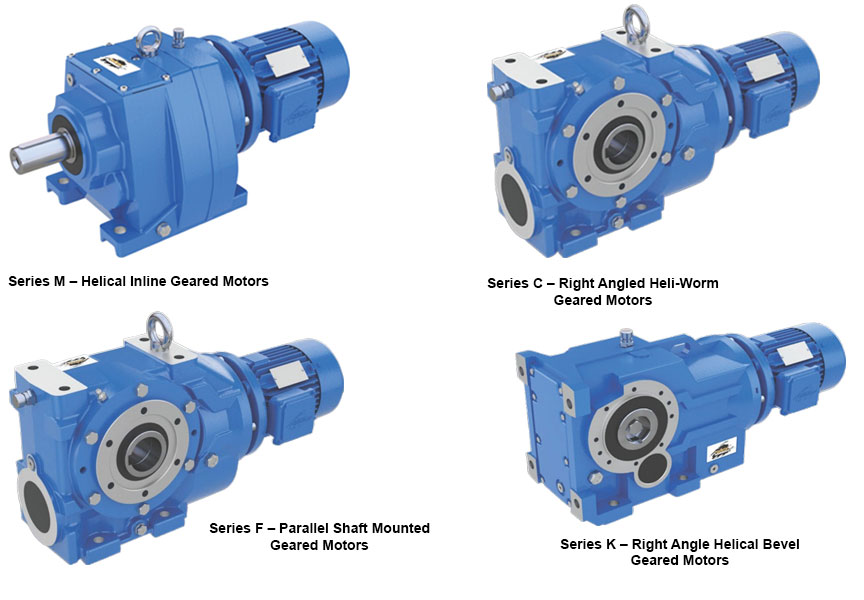
A deep dive into Core Gear Series of products M, C, F and K, by Power Build, and how they represent precision in motion.
At the heart of every high-performance industrial system lies the need for robust, reliable, and efficient power transmission. Power Build answers this need with its flagship geared motor series: M, C, F and K. Each series is meticulously engineered to serve specific operational demands while maintaining the universal promise of durability, efficiency, and performance.
Series M – Helical Inline Geared Motors
Compact and powerful, the Series M delivers exceptional drive solutions for a broad range of applications. With power handling up to 160kW and torque capacity reaching 20,000 Nm, it is the trusted solution for industries requiring quiet operation, high efficiency, and space-saving design. Series M is available with multiple mounting and motor options, making it a versatile choice for manufacturers and OEMs globally.
Series C – Right Angled Heli-Worm Geared Motors
Combining the benefits of helical and worm gearing, the Series C is designed for right-angled power transmission. With gear ratios of up to 16,000:1 and torque capacities of up to 10,000 Nm, this series is optimal for applications demanding precision in compact spaces. Industries looking for a smooth, low-noise operation with maximum torque efficiency rely on Series C for dependable performance.
Series F – Parallel Shaft Mounted Geared Motors
Built for endurance in the most demanding environments, Series F is widely adopted in steel plants, hoists, cranes and heavy-duty conveyors. Offering torque up to 10,000 Nm and high gear ratios up to 20,000:1, this product features an integral torque arm and diverse output configurations to meet industry-specific challenges head-on.
Series K – Right Angle Helical Bevel Geared Motors
For industries seeking high efficiency and torque-heavy performance, Series K is the answer. This right-angled geared motor series delivers torque up to 50,000 Nm, making it a preferred choice in core infrastructure sectors such as cement, power, mining and material handling. Its flexibility in mounting and broad motor options offer engineers the freedom in design and reliability in execution.
Together, these four series reflect Power Build’s commitment to excellence in mechanical power transmission. From compact inline designs to robust right-angle drives, each geared motor is a result of decades of engineering innovation, customer-focused design and field-tested reliability. Whether the requirement is speed control, torque multiplication or space efficiency, Radicon’s Series M, C, F and K stand as trusted powerhouses for global industries.
http://www.powerbuild.in
Call: +919727719344
Economy & Market
Conveyor belts are a vital link in the supply chain
Published
8 months agoon
June 16, 2025By
admin
Kamlesh Jain, Managing Director, Elastocon, discusses how the brand delivers high-performance, customised conveyor belt solutions for demanding industries like cement, mining, and logistics, while embracing innovation, automation, and sustainability.
In today’s rapidly evolving industrial landscape, efficient material handling isn’t just a necessity—it’s a competitive advantage. As industries such as mining, cement, steel and logistics push for higher productivity, automation, and sustainability, the humble conveyor belt has taken on a mission-critical role. In this exclusive interview, Kamlesh Jain, Managing Director, Elastocon, discusses how the company is innovating for tougher terrains, smarter systems and a greener tomorrow.
Brief us about your company – in terms of its offerings, manufacturing facilities, and the key end-user industries it serves.
Elastocon, a flagship brand of the Royal Group, is a trusted name in the conveyor belt manufacturing industry. Under the brand name ELASTOCON, the company produces both open-end and endless belts, offering tailor-made solutions to some of the most demanding sectors such as cement, steel, power, mining, fertiliser, and logistics. Every belt is meticulously engineered—from fabric selection to material composition—to ensure optimal performance in tough working conditions. With advanced manufacturing facilities and strict quality protocols, Elastocon continues to deliver high-performance conveyor solutions designed for durability, safety, and efficiency.
How is the group addressing the needs for efficient material handling?
Efficient material handling is the backbone of any industrial operation. At Elastocon, our engineering philosophy revolves around creating belts that deliver consistent performance, long operational life, and minimal maintenance. We focus on key performance parameters such as tensile strength, abrasion resistance, tear strength, and low elongation at working tension. Our belts are designed to offer superior bonding between plies and covers, which directly impacts their life and reliability. We also support clients
with maintenance manuals and technical advice, helping them improve their system’s productivity and reduce downtime.
How critical are conveyor belts in ensuring seamless material handling?
Conveyor belts are a vital link in the supply chain across industries. In sectors like mining, cement, steel, and logistics, they facilitate the efficient movement of materials and help maintain uninterrupted production flows. At Elastocon, we recognise the crucial role of belts in minimising breakdowns and increasing plant uptime. Our belts are built to endure abrasive, high-temperature, or high-load environments. We also advocate proper system maintenance, including correct belt storage, jointing, roller alignment, and idler checks, to ensure smooth and centered belt movement, reducing operational interruptions.
What are the key market and demand drivers for the conveyor belt industry?
The growth of the conveyor belt industry is closely tied to infrastructure development, increased automation, and the push for higher operational efficiency. As industries strive to reduce labor dependency and improve productivity, there is a growing demand for advanced material handling systems. Customers today seek not just reliability, but also cost-effectiveness and technical superiority in the belts they choose. Enhanced product aesthetics and innovation in design are also becoming significant differentiators. These trends are pushing manufacturers to evolve continuously, and Elastocon is leading the way with customer-centric product development.
How does Elastocon address the diverse and evolving requirements of these sectors?
Our strength lies in offering a broad and technically advanced product portfolio that serves various industries. For general-purpose applications, our M24 and DINX/W grade belts offer excellent abrasion resistance, especially for RMHS and cement plants. For high-temperature operations, we provide HR and SHR T2 grade belts, as well as our flagship PYROCON and PYROKING belts, which can withstand extreme heat—up to 250°C continuous and even 400°C peak—thanks to advanced EPM polymers.
We also cater to sectors with specialised needs. For fire-prone environments like underground mining, we offer fire-resistant belts certified to IS 1891 Part V, ISO 340, and MSHA standards. Our OR-grade belts are designed for oil and chemical resistance, making them ideal for fertiliser and chemical industries. In high-moisture applications like food and agriculture, our MR-grade belts ensure optimal performance. This diverse range enables us to meet customer-specific challenges with precision and efficiency.
What core advantages does Elastocon offer that differentiate it from competitors?
Elastocon stands out due to its deep commitment to quality, innovation, and customer satisfaction. Every belt is customised to the client’s requirements, supported by a strong R&D foundation that keeps us aligned with global standards and trends. Our customer support doesn’t end at product delivery—we provide ongoing technical assistance and after-sales service that help clients maximise the value of their investments. Moreover, our focus on compliance and certifications ensures our belts meet stringent national and international safety and performance standards, giving customers added confidence.
How is Elastocon gearing up to meet its customers’ evolving needs?
We are conscious of the shift towards greener and smarter manufacturing practices. Elastocon is embracing sustainability by incorporating eco-friendly materials and energy-efficient manufacturing techniques. In parallel, we are developing belts that seamlessly integrate with automated systems and smart industrial platforms. Our vision is to make our products not just high-performing but also future-ready—aligned with global sustainability goals and compatible with emerging technologies in industrial automation and predictive maintenance.
What trends do you foresee shaping the future of the conveyor belt industry?
The conveyor belt industry is undergoing a significant transformation. As Industry 4.0 principles gain traction, we expect to see widespread adoption of smart belts equipped with sensors for real-time monitoring, diagnostics, and predictive maintenance. The demand for recyclable materials and sustainable designs will continue to grow. Furthermore, industry-specific customisation will increasingly replace standardisation, and belts will be expected to do more than just transport material—they will be integrated into intelligent production systems. Elastocon is already investing in these future-focused areas to stay ahead of the curve.
Advertising or branding is never about driving sales. It’s about creating brand awareness and recall. It’s about conveying the core values of your brand to your consumers. In this context, why is branding important for cement companies? As far as the customers are concerned cement is simply cement. It is precisely for this reason that branding, marketing and advertising of cement becomes crucial. Since the customer is unable to differentiate between the shades of grey, the onus of creating this awareness is carried by the brands. That explains the heavy marketing budgets, celebrity-centric commercials, emotion-invoking taglines and campaigns enunciating the many benefits of their offerings.
Marketing strategies of cement companies have undergone gradual transformation owing to the change in consumer behaviour. While TV commercials are high on humour and emotions to establish a fast connect with the customer, social media campaigns are focussed more on capturing the consumer’s attention in an over-crowded virtual world. Branding for cement companies has become a holistic growth strategy with quantifiable results. This has made brands opt for a mix package of traditional and new-age tools, such as social media. However, the hero of every marketing communication is the message, which encapsulates the unique selling points of the product. That after all is crux of the matter here.
While cement companies are effectively using marketing tools to reach out to the consumers, they need to strengthen the four Cs of the branding process – Consumer, Cost, Communication and Convenience. Putting up the right message, at the right time and at the right place for the right kind of customer demographic is of utmost importance in the long run. It is precisely for this reason that regional players are likely to have an upper hand as they rely on local language and cultural references to drive home the point. But modern marketing and branding domain is exponentially growing and it would be an interesting exercise to tabulate and analyse its impact on branding for cement.
Our strategy is to establish reliable local partnerships
Power Build’s Core Gear Series
Compliance and growth go hand in h and
Turning Downtime into Actionable Intelligence
FORNNAX Appoints Dieter Jerschl as Sales Partner for Central Europe
Our strategy is to establish reliable local partnerships
Power Build’s Core Gear Series
Compliance and growth go hand in h and
Turning Downtime into Actionable Intelligence