Connect with us

Process

All our products are made under strict quality parameters

Published

on

Shares

What are the potential hazards that have to be guarded against in the process of cement and concrete manufacturing?
Approximately 10 per cent of workers employed in concrete manufacturing suffer from work-related injuries or illnesses in India. Workers’ eyes, skin, and respiratory tracts are directly exposed to cement dust. When the skin comes in contact with cement dust it may become moderately irritated due to thickening and development of cracks, or suffer severe damage from chemical burns. Furthermore, workers exposed to silica may suffer from lung disorders such as silicosis and even lung cancer due to long term exposure. Exposure to wet concrete also causes skin irritation which might lead to first, second, or third-degree chemical burns. The presence of hexavalent chromium, used in the cement manufacturing process poses a serious threat to the skin. There is also a risk of hazard to the workers while loading/unloading material, which in India is still a manual activity. This in turn also poses a high risk of passive/active fall from height.

What are the safety measures the cement companies have to take in their plants?
To ensure workers’ safety while working in cement plants, they should primarily be equipped with suitable respirators. Doing so prevents the inhalation of cement dust. Workers should also eat and drink only in areas where there is no dust to prevent ingestion of dust particles. They should be educated to rinse their eyes immediately with soap and water in case of contact with cement dust at any time.

While working with wet cement, they should be equipped with suitable gloves, workwear that has long sleeves and long pants, waterproof workwear boots, and suitable safety spectacles. Workers who are engaged in chipping and cleaning operations, should be equipped with suitable eye and face protection equipment at all time. While working at heights, the use of temporary or permanent fall protection systems should be mandatory.

What is the equipment you are making for improving the safety in cement manufacturing environment?
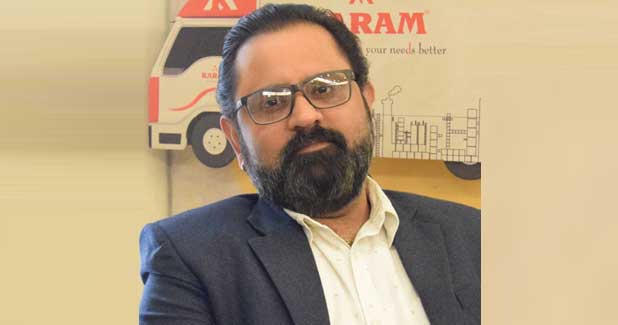
KARAM offers the highest quality of personal protective equipment from head to toe to ensure worker’s safety in a wide range of industrial set ups. Safety spectacles manufactured by KARAM are ideal for use in cement manufacturing environment as they are highly abrasion resistant. They are suitable to be worn in areas where the cement dust concentration is high. We also offer safety shoes with properties of oil/acid resistance and slip resistance. Our range of ear plugs and ear muffs are suitable to be used in the areas where noise pollution is an issue. In addition to that we offer fall protection equipment like harnesses, lanyards and temporary and permanent lifeline systems to protect the worker in case of a fall from height. All products manufactured by KARAM Industries are fully certified to the IS as well as the stringent EN (European) and ANSI (American) standards, produced under strict quality parameters.

What are the measures cement companies have to take to guard manpower against dust, heat, particles and noise pollution?
Respirators are ideal to protect workers against dust and particles found in cement manufacturing plants. To prevent workers’ exposure to dust particles, they should be equipped with protective eyewear and protective gloves. Noise pollution in cement manufacturing facilities can be minimised using earplugs and earmuffs. It is essential to educate the workers on the importance of the use of PPE in their respective work environment. Worker education and safety awareness is the first step to implement any positive measure in an industrial set up.

What is the level of hazard communication followed in the Indian cement industry and how it compares with the international best practices?
Lost Time Injury Frequency Rate (LTIFR) is an effective measure of worker safety. The lower the LTIFR, the safer workers are in a manufacturing facility. Leading Indian cement manufacturers have an LTIFR that is favourable to that found in the western countries. Hence leading Indian cement manufacturers with a low LTIFR follow international best practices. As evidence, consider that the LTIFR of Indian cement manufacturers is lower than that set by the Mineral Products Association in the UK. However, the LTIFR of smaller, less well-known cement manufacturers is hard to ascertain and almost certainly is higher than that of the largest players in the industry. In all likelihood small and less well-known cement manufacturers do not adhere to the highest safety standards, hence their safety standards are not aligned with international best practices.

What is the level of accident reporting standards adopted in India in comparison with global benchmarks? How we can bridge the gap?
Large well-established cement manufacturers take safety seriously. The largest Indian cement manufacturers enjoy an LTIFR of less than one while that set by the Mineral Products Association in the UK is 1.69. Hence workers in the largest Indian cement manufacturing facilities work in a very safe environment. A caveat, however, is that many injuries and accidents in India go unreported. In developed countries there are mechanisms in place to address workers grievances; in India, these are nearly absent.Hence there is certainly a gap in the number of accidents that occur and the number reported; this can be bridged by enacting legislation that protects workers and holds employers more accountable for workplace injuries. More stringent labour laws that emphasise the need for workers safety should be enacted and workers must be made aware of their rights. When workers know there is a practical legal course of action they can take when they are injured, it will lead to more workers reporting workplace injuries.

What are the benefits that high safety standards bring in for a corporate entity?
There are innumerable benefits to having high safety standards. First and foremost a corporate entity that follows the highest standards of safety has a far lower injury and accident rate than compared to others. Workers at such sites are safe which in itself is invaluable.

Also when a site adheres to the highest possible safety standards, those working at such sites are likely to remain longer with their employer. Hence high safety standards translate to loyal employees who are happier and more productive than employees working in sites where high standards of safety are absent. More skilled employees are also likely to work in entities that adhere to high safety standards, hence such entities attract a more productive workforce.

Is there a concept called "Total Safety Management, and if yes, what are its components?
Yes, this concept exists. "Total Safety Management" is a performance-oriented approach involving an entire organisation’s effort to establish and maintain a healthy and safe working environment. It is superior to traditional safety management programs that are centric exclusively on technical requirements with their eye only on short term results. Unlike Total Safety Management which ensures that the entire organisation focuses on safety, traditional safety management programs tend to be isolated and poorly if at all integrated with safety within an entire company.

The components of Total Safety Management are follows:

  • Concentration on long term goals of developing a system, not on short term goals of just preventing accidents.
  • Discarding the philosophy that accidents are inevitable.
  • Using statistics to identify two sources of accidents; these are usually system and human errors.
  • Instituting more rigorous job skills training.
  • Eliminating dependence on accident investigation to understand the causes of accidents. Relying instead on proactive approaches such as behavioural sampling, flow charts, fishbone diagrams, to help understand system flaws and achieve continuous improvement.
  • Provide supervisors knowledge of statistical methods and ensuring those tools are used to identify areas that need additional study.
  • Reducing fear organisation-wide by encouraging employees to report system defects and finding solutions to such defects.
  • Reducing accidents by introducing safety within processes. Training research and design personnel in safety concepts.

Are there any estimates on savings due to high standard of safety measures at the national and global levels?
In the United States, employers pay nearly $1 billion a week to workers as direct worker compensation costs. Such workers suffered disabling work injuries and illnesses. It is estimated in the US that each injury prevented, saves employers $37,000 in lost time while each occupation fatality avoided, saves employers $1,390,000. There are other benefits as well to creating a safe working environment. In the US, investors have found that not investing in companies that lack adequate safety measures produces higher returns. Hence many investors overlook such companies when creating a stock portfolio. Also, 60 per cent of CFOs in the US reported that every $1 invested in preventing injury provided a return of $2 or more. Indian metrics such as those available for the US are frugal, yet domestic trends are similar to those in the US. These are powerful incentives to invest in higher safety standards.

Continue Reading
Click to comment

Leave a Reply

Your email address will not be published. Required fields are marked *

Concrete

Steel: Shielded or Strengthened?

CW explores the impact of pro-steel policies on construction and infrastructure and identifies gaps that need to be addressed.

Published

on

By

Shares

Going forward, domestic steel mills are targeting capacity expansion
of nearly 40 per cent through till FY31, adding 80-85 mt, translating
into an investment pipeline of $ 45-50 billion. So, Jhunjhunwala points
out that continuing the safeguard duty will be vital to prevent a surge
in imports and protect domestic prices from external shocks. While in
FY26, the industry operating profit per tonne is expected to hold at
around $ 108, similar to last year, the industry’s earnings must
meaningfully improve from hereon to sustain large-scale investments.
Else, domestic mills could experience a significant spike in industry
leverage levels over the medium term, increasing their vulnerability to
external macroeconomic shocks.(~$ 60/tonne) over the past one month,
compressing the import parity discount to ~$ 23-25/tonne from previous
highs of ~$ 70-90/tonne, adds Jhunjhunwala. With this, he says, “the
industry can expect high resistance to further steel price increases.”

Domestic HRC prices have increased by ~Rs 5,000/tonne
“Aggressive
capacity additions (~15 mt commissioned in FY25, with 5 mt more by
FY26) have created a supply overhang, temporarily outpacing demand
growth of ~11-12 mt,” he says…

To read the full article Click Here

Continue Reading

Process

Price hikes, drop in input costs help cement industry to post positive margins: Care Ratings

Published

on

By

Shares

Region-wise,the southern region comprises 35% of the total cement capacity, followed by thenorthern, eastern, western and central region comprising 20%, 18%, 14% and 13%of the capacity, respectively.

The cement industry is expected to post positive margins on decent price hikes over the months, falling raw material prices and marked drop in overall production costs, said an analysis of Care Ratings.

Wholesale and retail prices of cement have increased 11.9% and 12.4%, respectively, in the current financial year. As whole prices have remained elevated in most of the markets in the months of FY20, against the corresponding period of the previous year.

Similarly, electricity and fuel cost have declined 11.9% during 9M FY20 due to drop in crude oil prices. Logistics costs, the biggest cost for cement industry, has also dropped 7.7% (selling and distribution) as the Railways extended the benefit of exemption from busy season surcharge. Moreover, the cost of raw materials, too, declined 5.1% given the price of limestone had fallen 11.3% in the same aforementioned period, the analysis said.

According to Care Ratings, though the overall sales revenue has increased only 1.3%, against 16% growth in the year-ago period, the overall expenditure has declined 3.2% which has benefited the industry largely given the moderation in sales.

Even though FY20 has been subdued in terms of production and demand, the fall in cost of production has still supported the cement industry by clocking in positive margins, the rating agency said.

Cement demand is closely linked to the overall economic growth, particularly the housing and infrastructure sector. The cement sector will be seeing a sharp growth in volumes mainly due to increasing demand from affordable housing and other government infrastructure projects like roads, metros, airports, irrigation.

The government’s newly introduced National Infrastructure Pipeline (NIP), with its target of becoming a $5-trillion economy by 2025, is a detailed road map focused on economic revival through infrastructure development.

The NIP covers a gamut of sectors; rural and urban infrastructure and entails investments of Rs.102 lakh crore to be undertaken by the central government, state governments and the private sector. Of the total projects of the NIP, 42% are under implementation while 19% are under development, 31% are at the conceptual stage and 8% are yet to be classified.

The sectors that will be of focus will be roads, railways, power (renewable and conventional), irrigation and urban infrastructure. These sectors together account for 79% of the proposed investments in six years to 2025. Given the government’s thrust on infrastructure creation, it is likely to benefit the cement industry going forward.

Similarly, the Pradhan Mantri Awaas Yojana, aimed at providing affordable housing, will be a strong driver to lift cement demand. Prices have started correcting Q4 FY20 onwards due to revival in demand of the commodity, the agency said in its analysis.

Industry’s sales revenue has grown at a CAGR of 7.3% during FY15-19 but has grown only 1.3% in the current financial year. Tepid demand throughout the country in the first half of the year has led to the contraction of sales revenue. Fall in the total expenditure of cement firms had aided in improving the operating profit and net profit margins of the industry (OPM was 15.2 during 9M FY19 and NPM was 3.1 during 9M FY19). Interest coverage ratio, too, has improved on an overall basis (ICR was 3.3 during 9M FY19).

According to Cement Manufacturers Association, India accounts for over 8% of the overall global installed capacity. Region-wise, the southern region comprises 35% of the total cement capacity, followed by the northern, eastern, western and central region comprising 20%, 18%, 14% and 13% of the capacity, respectively.

Installed capacity of domestic cement makers has increased at a CAGR of 4.9% during FY16-20. Manufacturers have been able to maintain a capacity utilisation rate above 65% in the past quinquennium. In the current financial year due to the prolonged rains in many parts of the country, the capacity utilisation rate has fallen from 70% during FY19 to 66% currently (YTD).

Source:moneycontrol.com

Continue Reading

Process

Wonder Cement shows journey of cement with new campaign

Published

on

By

Shares

The campaign also marks Wonder Cement being the first ever cement brand to enter the world of IGTV…

ETBrandEquity

Cement manufacturing company Wonder Cement, has announced the launch of a digital campaign ‘Har Raah Mein Wonder Hai’. The campaign has been designed specifically to run on platforms such as Instagram, Facebook and YouTube.

#HarRaahMeinWonderHai is a one-minute video, designed and conceptualised by its digital media partner Triature Digital Marketing and Technologies Pvt Ltd. The entire journey of the cement brand from leaving the factory, going through various weather conditions and witnessing the beauty of nature and wonders through the way until it reaches the destination i.e., to the consumer is very intriguing and the brand has tried to showcase the same with the film.

Sanjay Joshi, executive director, Wonder Cement, said, "Cement as a product poses a unique marketing challenge. Most consumers will build their homes once and therefore buy cement once in a lifetime. It is critical for a cement company to connect with their consumers emotionally. As a part of our communication strategy, it is our endeavor to reach out to a large audience of this country through digital. Wonder Cement always a pioneer in digital, with the launch of our IGTV campaign #HarRahMeinWonderHai, is the first brand in the cement category to venture into this space. Through this campaign, we have captured the emotional journey of a cement bag through its own perspective and depicted what it takes to lay the foundation of one’s dreams and turn them into reality."

The story begins with a family performing the bhoomi poojan of their new plot. It is the place where they are investing their life-long earnings; and planning to build a dream house for the family and children. The family believes in the tradition of having a ‘perfect shuruaat’ (perfect beginning) for their future dream house. The video later highlights the process of construction and in sequence it is emphasising the value of ‘Perfect Shuruaat’ through the eyes of a cement bag.

Tarun Singh Chauhan, management advisor and brand consultant, Wonder Cement, said, "Our objective with this campaign was to show that the cement produced at the Wonder Cement plant speaks for itself, its quality, trust and most of all perfection. The only way this was possible was to take the perspective of a cement bag and showing its journey of perfection from beginning till the end."

According to the company, the campaign also marks Wonder Cement being the first ever cement brand to enter the world of IGTV. No other brand in this category has created content specific to the platform.

Continue Reading

Trending News

SUBSCRIBE TO THE NEWSLETTER


Don't miss out on valuable insights and opportunities to connect with like minded professionals.


    This will close in 0 seconds