Environment
Water reuse – Sustainable solution for water security
Published
7 years agoon
By
admin
Taking a serious note of the cascading effect a water stressed scenario can have, it is imperative to realise the true potential of the limited water resources available, in other words, water must be reclaimed.
India is one of the fastest growing economies in the world at the moment and there is no doubt that uninterrupted power and water supply will be the cornerstones to ensuring there are no hurdles in India’s endeavour to emerge as a global economy.
Keeping this growth and the burgeoning population across the country in mind, it is only obvious that the demand for water is set to grow manifold. However, the reality presents a gloomy picture in terms of the fact that India is stressed in terms of its water resources. This presents an alarming picture considering the augmented challenges this scenario presents for the growth of this country.
Taking a serious note of the cascading effect a water stressed scenario can have, it is imperative to realise the true potential of the limited water resources available, in other words, water must be reclaimed. Water is too precious to be used just once and it is in this perspective that Water reclamation and reuse constitute one of the major trends in water management.
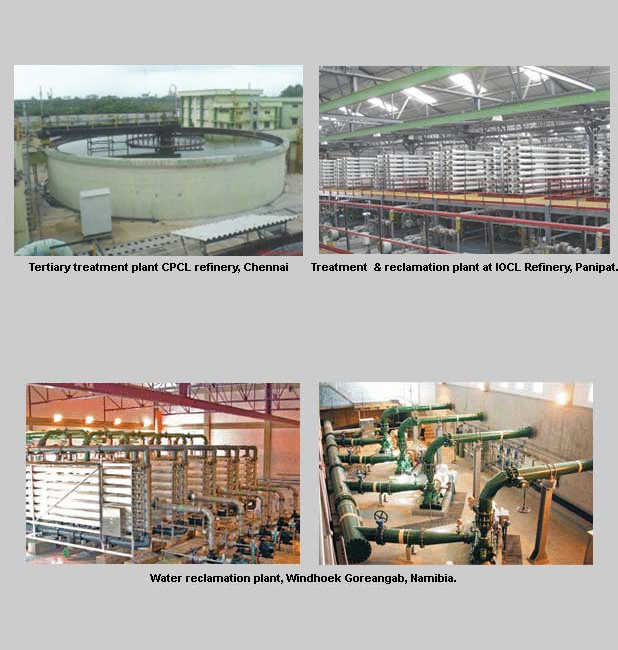
Among the list of prominent case studies in promoting municipal industrial partnerships, for over a decade now, secondary treated sewage from the 110 MLD Kodungaiyur STP in Chennai is further treated and served as intake water for the tertiary treatment plant in CPCL refinery, thus reducing the industry’s dependence on freshwater sources and ensuring water security.
Leading by example with a model to ensure water security for the power sector, a state-of-the-art reclamation plant at NTPC, Badarpur. The plant, with a capacity of 2,500 cubic metres per day, was set up in 2014 to treat contaminated surface water and provide it as process water for the power plant. The technology put in place involved the processes of membrane bioreactor and reverse osmosis.
On a global scale, along the lines of Singapore’s NEWater, the world’s first municipal water reclamation plant for direct potable consumption with a capacity of 21,000 cubic metres at Windhoek Goreangab, Namibia is noteworthy. The project started way back in 2002 and it has been successfully operated for the last 15 years. The concept of water recycle has immense potential not only in the municipal sector but also in the industrial sector given the massive water requirement and the harmful contaminants present in the discharged effluent. Adding further credibility to the concept of reuse even in cases where a cocktail of effluents is to be treated, the Ujams Wastewater treatment and Water Reuse project stands tall which received the Distinction Award for the "Industrial Water Project of the Year" at the Global Water Summit held at Athens, Greece, 2015. The Award was given on account of numerous unique features. First, the project comprised the first industrial water reclamation plant and the first wastewater MBR plant in Namibia.
Second, the complex range of contaminants in the feed water-a blend of wastewater streams from a brewery, an abattoir, a tannery, a beverage company and a chocolate producer-presented a serious challenge. With a successful seven-month onsite trial,..WABAG proved the mettle of an innovative treatment train using its in-house developed fine sieving pre-treatment process, MICROPUR. Combining this with MBR, UV disinfection, sludge treatment and exhaust air treatment, the joint venture leveraged the best expertise the private sector had to offer to make its partnership work. Third, this project will see effluent treated to standards suitable not only for industrial process water and irrigation, but also for blending in with the city’s drinking water system.
In India, the water reclamation plants at IOCL, Panipat are stand out references for treatment of effluent and recycle within the industrial facilities. The Indian Oil Corporation, Panipat had to build two water reclamation plants in response to the demands of the environmental authorities. Subsequently, WABAG was awarded the contract for construction, operation and surveillance of the plants.
The Panipat Refinery Expansion Water Reclamation Plant, which treats both secondary refinery effluents and various refinery/petrochemical process effluents, was commissioned at the end of 2006. The naphtha cracker and its downstream polymer units (Naphtha Cracker Complex) were commissioned in 2010. The Panipat Naphtha Cracker Water Reclamation Plant reclaims process water from naphtha cracker secondary effluent, cooling tower blow-downs and demineralisation regenerates.
In both cases, advanced multi-barrier systems have been utilised in order to meet the strict quality requirements for recycling as boiler make-up water. The processes employed at each of these plants comprise a wide range of technologies from clarification, ultrafiltration and reverse osmosis to demineralisation, using mixed bed ion exchange filters.
The benefits of adopting water reuse mechanisms to ensure water security and realise the true potential of water as a finite resource are immense. First, the revenue loss for industries due to water shortage can be averted. Second, by supplying treated water to industries, cash strapped municipalities earn revenue. Third, increase in demand for treated sewage as feed water for industries would mean that more sewage would need to be treated. This would in turn increase the percentage of wastewater treated in the country, which currently stands at a miserable 37 per cent.
Thus, water reclamation is beneficial not only from a business perspective but also in terms of ensuring both water and environment security by alleviating pollution. Fourth, the surfeit of freshwater used in industries could instead be used to supplement irrigation and in areas where the application of freshwater is essential.
Fifth, the concept of ZLD (zero liquid discharge) is consolidated. As stated in the beginning paragraph, uninterrupted water supply are not only critical for industrial development but also for progress in human development indices. WABAG has substantiated this point in terms of its value proposition that is reflected in the brand tagline ‘Sustainable solutions for a better life’.
About the author Rajneesh Chopra, Global Head – Business Development, VA Tech WABAG Limited.
You may like
Concrete
We engineer smarter systems to reduce waste
Published
2 months agoon
December 12, 2025By
admin
Naveen Kumar Sharma, AVP – Sales and Marketing, Toshniwal Industries, talks about redefining instrumentation with customised, digitally enabled solutions engineered for harsh plant environments.
For over six decades, Toshniwal Industries has played a pioneering role in advancing process instrumentation for Indian manufacturing. In this exclusive conversation with Kanika Mathur, Naveen Kumar Sharma, AVP – Sales & Marketing, explains how the company designs kiln and grinding plant solutions tailored to the unique demands of the cement industry. As plants transition to higher AFR use and smarter automation, Toshniwal’s technologies offer greater reliability, accuracy and predictive insight.
Tell us how are your process instruments and condition monitoring system customised for cement kilns and grinding plant operations?
Toshniwal is a company with a legacy of over 65 years, and our experience has taught us that cement kilns and grinding units are fundamentally different in their operational demands. As an Indian company, we understand the unique requirements of Indian cement manufacturers. We work closely with our customers, engage deeply with their technical teams, and study operational challenges in real-time.
Based on these insights, we customise our solutions for both kiln and grinding applications. This tailoring is not just at a product level, but at a solution level—engineering design, instrumentation logic, and process optimisation. Our primary objective, for both the industry and our customers, is to reduce yield loss. Every customisation we implement is driven by this goal. We engineer smarter systems to reduce waste, improve consistency and increase plant reliability.
Ultimately, our solutions are built on an understanding that cement manufacturers require robust, practical and maintainable instruments. We design with this mindset so plants can operate more efficiently, with better control and higher profitability.
With the rising use of AFR, how do your solutions support thermal zone reliability and process time?
Our solutions are built around four core parameters: energy efficiency, yield loss reduction, product quality and environmental responsibility. These pillars drive our engineering decisions and define how our technologies support cement plants, especially as they adopt alternative fuels and raw materials (AFR).
We strongly believe in energy conservation. Every product we offer—whether for thermal monitoring, kiln control or flame optimisation—is engineered to improve energy performance. Reducing yield loss is another principle deeply embedded in our solutions, because production interruptions and material losses directly affect plant profitability and clinker quality.
We are also highly conscious of the end-product quality delivered by our customers to their markets. Consistency in burning, heat transfer, and thermal profiling directly influences clinker characteristics, and our instruments help maintain this stability.
Lastly, and most importantly, we care about the environment. We want to leave a greener world for the next generation. This mindset aligns with India’s digitalisation movement, advocated by our Prime Minister. Digital technologies are crucial for optimising AFR use, process stability, emissions and kiln efficiency. We are proud to contribute to this transition.
By optimising flame patterns, energy use, and pollution, our solutions deliver direct and indirect savings. Plants benefit from lower operational losses, reduced maintenance, and improved reliability, especially in pyroprocessing zones.
Tell us how do you address harsh environment challenges in cement plants, say dust, temperature, etc. with your sensor and monitoring?
This is a very important question because cement plants, steel plants, and power plants operate in extremely harsh environments. There are two major categories of specifications that we must respect while designing solutions: technical specifications and environmental specifications. Technical specifications relate to performance accuracy, measurement integrity, responsiveness and process safety. Environmental specifications, on the other hand, relate to high temperatures, heavy dust, humidity, vibrations and corrosive atmospheres. Our solutions are engineered to withstand both. We customise sensors, housings, mounting mechanisms and protective systems so that our instruments operate at 100 per cent functionality in harsh conditions. We ensure that the plant experiences minimal downtime from our systems. That is our engineering philosophy—solutions must work reliably in real-world environments, not just in ideal laboratory conditions.
What retrofit pathways do you offer for older cement lines to upgrade measurement and monitoring systems and how is the Indian market responding?
Every solution we provide is scalable and digitally adaptable. Technology evolves rapidly, and our offerings evolve with it. When we upgrade instruments or monitoring systems, we design them to integrate with existing plant infrastructure, so customers do not have to rebuild everything from scratch. Once our solution is installed, software upgrades or performance improvements can often be deployed without major cost. This ensures that customers continue to benefit from ongoing technological advancements. The Indian market has responded positively to this approach. Plant operators appreciate solutions that are future-ready and dynamic rather than static. Scalability helps them maintain competitiveness, extend asset life, and move toward smart manufacturing with confidence.
So how is your organisation leveraging digital technologies in your instrumentation portfolio for cement plants?
Digitalisation is at the core of every product we manufacture. We stand firmly behind the digital movement, not only because it represents efficiency, but because it is the direction in which the Indian industrial ecosystem is evolving. We deploy machine-vision technologies, advanced inline monitoring systems, and solutions capable of visualising the
inside of the furnace. These systems help reduce downtime, enable predictive asset management and provide actionable analytics to customers. All our technologies communicate seamlessly with Level 1, Level 2, and Level 3 automation. This allows integration across SCADA, DCS, ERP, and cloud ecosystems. Digitalisation for us is not an add-on—it is foundational to how our instrumentation is built.
What are your key innovation priorities to help Indian cement plant producers hit harder, higher substitution rates, lower emissions and smarter processing?
Sustainability is a national priority, and we are committed to supporting it. Our current portfolio already helps improve efficiency, reduce emissions, and support alternative fuel integration. But our innovation roadmap goes further. We are now developing specialised productivity-oriented software modules that will provide proactive alerts—not just alarms triggered after a fault has occurred. These modules will leverage artificial intelligence and machine learning to detect patterns early. The intention is to help plant teams take corrective actions ahead of time, reducing yield loss and environmental impact. Instead of informing the plant that a disruption has happened, the system will indicate that a disruption will happen, giving operators time to prevent it. We believe that within the next 12 to 18 months, we will launch these predictive solutions in combination with our instrumentation. When implemented, they will significantly improve decision-making, process stability and environmental performance across the Indian cement sector.
– Kanika Mathur
Concrete
India donates 225t of cement for Myanmar earthquake relief
Published
8 months agoon
June 17, 2025By
admin
On 23 May 2025, the Indian Navy ship UMS Myitkyina arrived at Thilawa (MITT) port carrying 225 tonnes of cement provided by the Indian government to aid post-earthquake rebuilding efforts in Myanmar. As reported by the Global Light of Myanmar, a formal handover of 4500 50kg cement bags took place that afternoon. The Yangon Region authorities managed the loading of the cement onto trucks for distribution to the earthquake-affected zones.
Concrete
Reclamation of Used Oil for a Greener Future
Published
8 months agoon
June 16, 2025By
admin
In this insightful article, KB Mathur, Founder and Director, Global Technical Services, explores how reclaiming used lubricants through advanced filtration and on-site testing can drive cost savings, enhance productivity, and support a greener industrial future. Read on to discover how oil regeneration is revolutionising sustainability in cement and core industries.
The core principle of the circular economy is to redefine the life cycle of materials and products. Unlike traditional linear models where waste from industrial production is dumped/discarded into the environment causing immense harm to the environment;the circular model seeks to keep materials literally in continuous circulation. This is achievedthrough processes cycle of reduction, regeneration, validating (testing) and reuse. Product once
validated as fit, this model ensures that products and materials are reintroduced into the production system, minimising waste. The result? Cleaner and greener manufacturing that fosters a more sustainable planet for future generations.
The current landscape of lubricants
Modern lubricants, typically derived from refined hydrocarbons, made from highly refined petroleum base stocks from crude oil. These play a critical role in maintaining the performance of machinery by reducing friction, enabling smooth operation, preventing damage and wear. However, most of these lubricants; derived from finite petroleum resources pose an environmental challenge once used and disposed of. As industries become increasingly conscious of their environmental impact, the paramount importance or focus is shifting towards reducing the carbon footprint and maximising the lifespan of lubricants; not just for environmental reasons but also to optimise operational costs.
During operations, lubricants often lose their efficacy and performance due to contamination and depletion of additives. When these oils reach their rejection limits (as they will now offer poor or bad lubrication) determined through laboratory testing, they are typically discarded contributing to environmental contamination and pollution.
But here lies an opportunity: Used lubricants can be regenerated and recharged, restoring them to their original performance level. This not only mitigates environmental pollution but also supports a circular economy by reducing waste and conserving resources.
Circular economy in lubricants
In the world of industrial machinery, lubricating oils while essential; are often misunderstood in terms of their life cycle. When oils are used in machinery, they don’t simply ‘DIE’. Instead, they become contaminated with moisture (water) and solid contaminants like dust, dirt, and wear debris. These contaminants degrade the oil’s effectiveness but do not render it completely unusable. Used lubricants can be regenerated via advanced filtration processes/systems and recharged with the use of performance enhancing additives hence restoring them. These oils are brought back to ‘As-New’ levels. This new fresher lubricating oil is formulated to carry out its specific job providing heightened lubrication and reliable performance of the assets with a view of improved machine condition. Hence, contributing to not just cost savings but leading to magnified productivity, and diminished environmental stress.
Save oil, save environment
At Global Technical Services (GTS), we specialise in the regeneration of hydraulic oils and gear oils used in plant operations. While we don’t recommend the regeneration of engine oils due to the complexity of contaminants and additives, our process ensures the continued utility of oils in other applications, offering both cost-saving and environmental benefits.
Regeneration process
Our regeneration plant employs state-of-the-art advanced contamination removal systems including fine and depth filters designed to remove dirt, wear particles, sludge, varnish, and water. Once contaminants are removed, the oil undergoes comprehensive testing to assess its physico-chemical properties and contamination levels. The test results indicate the status of the regenerated oil as compared to the fresh oil.
Depending upon the status the oil is further supplemented with high performance additives to bring it back to the desired specifications, under the guidance of an experienced lubrication technologist.
Contamination Removal ? Testing ? Additive Addition
(to be determined after testing in oil test laboratory)
The steps involved in this process are as follows:
1. Contamination removal: Using advanced filtration techniques to remove contaminants.
2. Testing: Assessing the oil’s properties to determine if it meets the required performance standards.
3. Additive addition: Based on testing results, performance-enhancing additives are added to restore the oil’s original characteristics.
On-site oil testing laboratories
The used oil from the machine passes through 5th generation fine filtration to be reclaimed as ‘New Oil’ and fit to use as per stringent industry standards.
To effectively implement circular economy principles in oil reclamation from used oil, establishing an on-site oil testing laboratory is crucial at any large plants or sites. Scientific testing methods ensure that regenerated oil meets the specifications required for optimal machine performance, making it suitable for reuse as ‘New Oil’ (within specified tolerances). Hence, it can be reused safely by reintroducing it in the machines.
The key parameters to be tested for regenerated hydraulic, gear and transmission oils (except Engine oils) include both physical and chemical characteristics of the lubricant:
- Kinematic Viscosity
- Flash Point
- Total Acid Number
- Moisture / Water Content
- Oil Cleanliness
- Elemental Analysis (Particulates, Additives and Contaminants)
- Insoluble
The presence of an on-site laboratory is essential for making quick decisions; ensuring that test reports are available within 36 to 48 hours and this prevents potential mechanical issues/ failures from arising due to poor lubrication. This symbiotic and cyclic process helps not only reduce waste and conserve oil, but also contributes in achieving cost savings and playing a big role in green economy.
Conclusion
The future of industrial operations depends on sustainability, and reclaiming used lubricating oils plays a critical role in this transformation. Through 5th Generation Filtration processes, lubricants can be regenerated and restored to their original levels, contributing to both environmental preservation and economic efficiency.
What would happen if we didn’t recycle our lubricants? Let’s review the quadruple impacts as mentioned below:
1. Oil Conservation and Environmental Impact: Used lubricating oils after usage are normally burnt or sold to a vendor which can be misused leading to pollution. Regenerating oils rather than discarding prevents unnecessary waste and reduces the environmental footprint of the industry. It helps save invaluable resources, aligning with the principles of sustainability and the circular economy. All lubricating oils (except engine oils) can be regenerated and brought to the level of ‘As New Oils’.
2. Cost Reduction Impact: By extending the life of lubricants, industries can significantly cut down on operating costs associated with frequent oil changes, leading to considerable savings over time. Lubricating oils are expensive and saving of lubricants by the process of regeneration will overall be a game changer and highly economical to the core industries.
3. Timely Decisions Impact: Having an oil testing laboratory at site is of prime importance for getting test reports within 36 to 48 hours enabling quick decisions in critical matters that may
lead to complete shutdown of the invaluable asset/equipment.
4. Green Economy Impact: Oil Regeneration is a fundamental part of the green economy. Supporting industries in their efforts to reduce waste, conserve resources, and minimise pollution is ‘The Need of Our Times’.
About the author:
KB Mathur, Founder & Director, Global Technical Services, is a seasoned mechanical engineer with 56 years of experience in India’s oil industry and industrial reliability. He pioneered ‘Total Lubrication Management’ and has been serving the mining and cement sectors since 1999.
FORNNAX Appoints Dieter Jerschl as Sales Partner for Central Europe
Budget 2026–27 infra thrust and CCUS outlay to lift cement sector outlook
Steel: Shielded or Strengthened?
JK Cement Commissions 3 MTPA Buxar Plant, Crosses 31 MTPA
JK Cement Crosses 31 MTPA Capacity with Commissioning of Buxar Plant in Bihar
FORNNAX Appoints Dieter Jerschl as Sales Partner for Central Europe
Budget 2026–27 infra thrust and CCUS outlay to lift cement sector outlook
Steel: Shielded or Strengthened?
JK Cement Commissions 3 MTPA Buxar Plant, Crosses 31 MTPA