Connect with us

Product Development

Supreme Court pushes for Sustainability in Mining

Published

on

Shares

In this article, the authors have discussed the environmental interventions made by the Supreme Court in the mining sector. Further, the authors have analysed the consequential impact on various others industry sectors because of such interventions.

All the major countries of the world are striving for sustainable development. Sustainable development refers to the development that meets the needs of the present, without compromising the ability of future generations to meet their own needs. Both national and international organisations have highlighted the importance of sustainable development.

Mining is one of the major sectors, which plays a crucial role in the process of country’s economic development and acts as a catalyst for the growth of other core industries like power, steel, cement, etc., which, in turn, are critical for the overall development of the economy. India is one of the largest exporters of iron ore, chromite, bauxite, mica and manganese, and it is ranked fifth among the mineral-producing countries in terms of volume of production.

Mining includes activities like pitting, digging and quarrying among others undertaken to gainfully extract a mineral from the Earth’s crust. Mining is a fault-line of development which runs between environment and economy. It largely impacts the environment and sustainable development goals of the government. The judiciary has time and again made interventions in the mining sector in order to meet the threshold of sustainable development goals.

The Supreme Court intervention in mining operations dates back to the year 1997 when in Samatha v. State of A.P., (1997) 8 SCC 191, the Court recommended that at least 20 per cent of the profit be set aside as a permanent fund for development needs.

Goa Foundation v. M/s Sesa Sterlite Ltd & Ors. (February 7, 2018)
In Goa Foundation v. Union of India, (2014) 6 SCC 590, the Apex Court issued various directions considering the finding that illegal mining was committed in the State of Goa. One of such directions was, to the State of Goa, to frame a policy to decide in what matters mining leases are to be granted and such grant shall be subject to the provisions of Mines and Minerals (Development and Regulation) Act, 1957 (MMDR Act) and other related laws. Court in this case was aware and conscious of illegal and indiscriminate mining for which it did not interfere with State Government’s order suspending said mining leases. The court never intended renewal of said mining leases but instead intended that State should grant fresh mining leases.

Subsequently, on February 7, 2018, the apex court in ‘Goa Foundation v. M/S Sesa Sterlite Ltd. & Ors, (2018) 4 SCC 218’ cancelled 88 iron ore mining leases in the State. The court held that the State was obligated to grant fresh leases, rather than allowing second renewals, pursuant to its order in the case of Goa Foundation v. Union of India. The court also came down on the State for showing undue haste in renewing the mining leases, observing that the State was willing to sacrifice rule of law for the benefit of lease holders.

Common Cause v. Union of India (August 2, 2017)
The apex Court in ‘Common Cause v. Union of India, (2017) 9 SCC 499’ took notice of rampant and illegal mining going in the State of Orissa which was causing untold misery to tribal people in that area. There was over extraction of 2,155 lakh MT of iron ore and manganese ore. Rs 17,506 crore worth mineral ore produced without obtaining environment clearance. In such circumstances, court suspended various illegal mining activities going in Orissa. The grounds of dismissal were as follows:

  • No forest clearance or environment clearance or both;
  • The lease holder had a working lease and has wrongly been included as a non operational lease;
  • Non observance of statutory requirements.

    The ambit of the phrase ‘illegal mining’ was also discussed in this case. The court held that illegal mining does not only mean mining outside lease area. Illegality may take place inside the lease area. Purpose of MMDR Act is to ensure scientific mining, balanced utilisation of natural resources and protection and preservation of environment by adhering to statutory requirements. Non adherence would invite penalty and termination of lease. Adherence to statutory provisions implies adherence to provisions of Environment (Protection) Act, 1986, laws pertaining to air and water pollution, Forest Conservation Act, 1980 and mining statutes.

    Manohar Lal Sharma v. Principal Secy (August 25, 2014)
    The Apex Court in ‘Manohar Lal Sharma v. Principal Secy., (2014) 9 SCC 516’ quashed the allocation of 214 coal blocks, which were allotted to private miners between 1993 and 2011. It was held that the allotment of coal blocks made by the Screening Committee of the Government of India were arbitrary and illegal as the allotment did not meet the requirements of the procedure laid down in the statute. The court largely relied on the CAG report of 2012, which assessed the loss to the exchequer to the tunes of 1.86 lakh crore due to this illegal coal block allocation. Apart from these, there have been other judgments wherein the Apex Court has interfered in the mining sector. The table mentions all the important judgments showing the intervention of the Supreme Court in the mining sector.
    Intergenerational equity (rationale for interventions by the SC)
    Majorly, the Apex Court has interfered on the grounds of sustainable development and the principle of intergenerational equity. The principle of intergenerational equity states that we, the human species, hold the natural environment of our planet in common with all members of our species: past generations, the present generation, and future generations. As members of the present generation, we hold the Earth in trust for future generations. At the same time, we are beneficiaries entitled to use and benefit from it.

    Three principles form the basis of Intergenerational Equity. The first principle relied on is called the principle of "conservation of options". This requires each generation to conserve the diversity of the natural and cultural resource base in such a manner that the options available to future generations are not restricted. The second principle relied on is the principle of "conservation of quality". This was with reference to the submission that future generations should not be subjected to a quality of the planet worse than what it is today. In other words, future generations are also entitled to quality enjoyment of the diversity in the natural and cultural resource base. The third principle relied upon was the principle of "conservation of access" which is to say that future generations have an equitable right to access the diversity of the natural and cultural resource base as is available to the present generation.

    Consequential impact of such interventions on other sectors
    Out of the total industrial sector, mining contributes around 10 – 11 per cent of the country’s GDP. Interventions in the form of ban on mining, cancellation of leases will largely impact other sectors also. The first and foremost impact of such ban occurs on the employment of people. Since a chunk of the State population, where mining is conducted, is involved in the mining operations including truck drivers. Mining ban or cancellation of leases will leave a large chunk of population jobless which will impact the GDP of the State.

    Second, manufacturing sector will be affected since the manufacture of a lot of products depends upon the supply of minerals and most of the manufacturers depend upon local supply generated through mining. Complete ban will forced the manufacturers to import minerals from other States which consequently will impact the final price of the product or it will lead to force closure of such manufacturing units.

    Third, mining has been a source of revenue generation for many states and such bans largely impact the State exchequer. It is to be noted that the impact may lead to reduction in the GDP of the State. Apart from these various other dependent sectors will be affected and therefore the Supreme Court should consider the consequences before making such interventions.

    Conclusion
    Banning and cancellation of mining leases will increase our dependence on import as we have to import massive volumes of these minerals, putting more pressure on State exchequer, rendering industries uncompetitive and generating a massive loss of employment. The court should put together a group of relevant experts and industry personnel to find a way out of this imminent disaster.
    Two suggestions can be made here for a possible way forward:

  • To immediately establish technically competent and independent regulators. These regulators, by drawing up the necessary regulations and enforcing them strictly, will de-politicise the sector and minimise violations of environment laws and rights of the tribal people.
  • The government has to make sure that its policies attract organised, technologically well-equipped and socially and environmentally conscious mining companies.

    Implementation of these suggestions may allow to meet its goal of sustainable development along with gaining economic development. Complete ban of mining activities is not the solution, we have to be better regulators and enforcement of policies by the State agencies is the need of the hour.

    Judgement Date Findings Minerals
    Samatha v. State of Andhra Pradesh 11.07.1997 Government lands, tribal lands, and forestlands in the scheduled Areas cannot be leased out to non-tribals or to private companies for mining. All
    M.C. Mehta v. Union of India 18.03.2004 No mining should be allowed in the Aravalli mountain range in Haryana and Rajasthan. All
    Orissa Mining Corporation Ltd v. Ministry of Environment & Forests 18.04.2013 The Company was allowed to begin its $1.7 billion bauxite mining project only if it had the consent of the gram sabhas (village councils) in Niyamgiri hills. Bauxite
    Goa Foundation v. Union of India 21.04.2014 Illegal, uncontrolled and unmonitored mining in Goa. Cancelling of expired mining leases. Iron ore
    Manohar Lal v. Principal Secy. 25.08.2014 Quashing of allocation of coal blocks by the Central government between 1993 and 2011. Coal
    Common Cause v. Union of India 02.08.2017 Illegal and rampant mining found in State of Orissa. Suspension of illegal mining going on. Iron ore and manganese ore

    Banning and cancellation of mining leases will increase our dependence on import.

    ABOUT THE AUTHORS:
    KG Singhania and Alok Vajpeyi of Singhania & Co. Mumbai

    Disclaimer:
    Singhania & Co., Mumbai – The information in this article is not intended to constitute legal or other professional advice or services. The information is not intended to be relied upon as the sole basis for any decision which may affect you or your business. Before making any decision or taking any action that might affect your business, you should consult a qualified professional adviser. Singhania & Co. shall not be responsible for any loss whatsoever sustained by any person who relies on the information contained herein.

  • Continue Reading
    Click to comment

    Leave a Reply

    Your email address will not be published. Required fields are marked *

    Economy & Market

    Power Build’s Core Gear Series

    Published

    on

    By

    Shares

    A deep dive into Core Gear Series of products M, C, F and K, by Power Build, and how they represent precision in motion.

    At the heart of every high-performance industrial system lies the need for robust, reliable, and efficient power transmission. Power Build answers this need with its flagship geared motor series: M, C, F and K. Each series is meticulously engineered to serve specific operational demands while maintaining the universal promise of durability, efficiency, and performance.

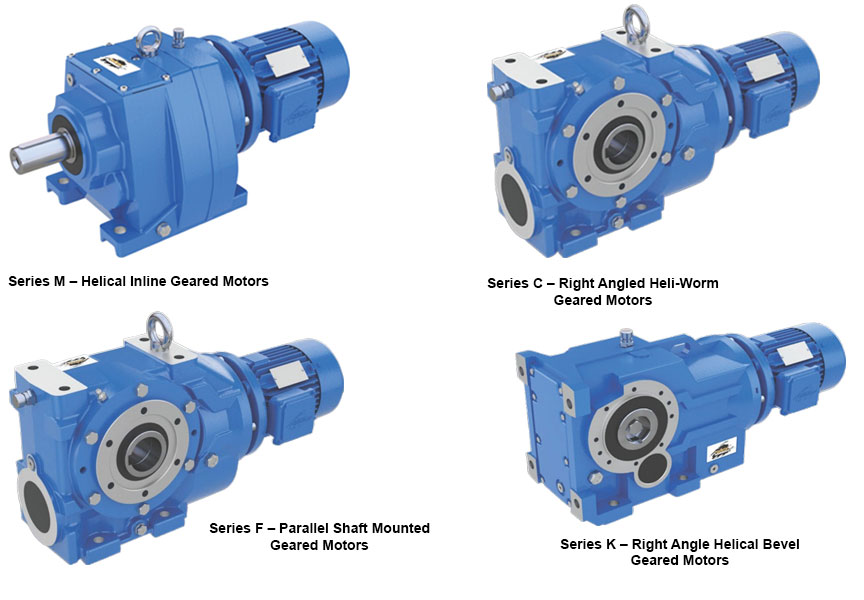
    Series M – Helical Inline Geared Motors
    Compact and powerful, the Series M delivers exceptional drive solutions for a broad range of applications. With power handling up to 160kW and torque capacity reaching 20,000 Nm, it is the trusted solution for industries requiring quiet operation, high efficiency, and space-saving design. Series M is available with multiple mounting and motor options, making it a versatile choice for manufacturers and OEMs globally.

    Series C – Right Angled Heli-Worm Geared Motors
    Combining the benefits of helical and worm gearing, the Series C is designed for right-angled power transmission. With gear ratios of up to 16,000:1 and torque capacities of up to 10,000 Nm, this series is optimal for applications demanding precision in compact spaces. Industries looking for a smooth, low-noise operation with maximum torque efficiency rely on Series C for dependable performance.

    Series F – Parallel Shaft Mounted Geared Motors
    Built for endurance in the most demanding environments, Series F is widely adopted in steel plants, hoists, cranes and heavy-duty conveyors. Offering torque up to 10,000 Nm and high gear ratios up to 20,000:1, this product features an integral torque arm and diverse output configurations to meet industry-specific challenges head-on.

    Series K – Right Angle Helical Bevel Geared Motors
    For industries seeking high efficiency and torque-heavy performance, Series K is the answer. This right-angled geared motor series delivers torque up to 50,000 Nm, making it a preferred choice in core infrastructure sectors such as cement, power, mining and material handling. Its flexibility in mounting and broad motor options offer engineers the freedom in design and reliability in execution.
    Together, these four series reflect Power Build’s commitment to excellence in mechanical power transmission. From compact inline designs to robust right-angle drives, each geared motor is a result of decades of engineering innovation, customer-focused design and field-tested reliability. Whether the requirement is speed control, torque multiplication or space efficiency, Radicon’s Series M, C, F and K stand as trusted powerhouses for global industries.

    http://www.powerbuild.in
    Call: +919727719344

    Continue Reading

    Economy & Market

    Conveyor belts are a vital link in the supply chain

    Published

    on

    By

    Shares


    Kamlesh Jain, Managing Director, Elastocon, discusses how the brand delivers high-performance, customised conveyor belt solutions for demanding industries like cement, mining, and logistics, while embracing innovation, automation, and sustainability.

    In today’s rapidly evolving industrial landscape, efficient material handling isn’t just a necessity—it’s a competitive advantage. As industries such as mining, cement, steel and logistics push for higher productivity, automation, and sustainability, the humble conveyor belt has taken on a mission-critical role. In this exclusive interview, Kamlesh Jain, Managing Director, Elastocon, discusses how the company is innovating for tougher terrains, smarter systems and a greener tomorrow.

    Brief us about your company – in terms of its offerings, manufacturing facilities, and the key end-user industries it serves.
    Elastocon, a flagship brand of the Royal Group, is a trusted name in the conveyor belt manufacturing industry. Under the brand name ELASTOCON, the company produces both open-end and endless belts, offering tailor-made solutions to some of the most demanding sectors such as cement, steel, power, mining, fertiliser, and logistics. Every belt is meticulously engineered—from fabric selection to material composition—to ensure optimal performance in tough working conditions. With advanced manufacturing facilities and strict quality protocols, Elastocon continues to deliver high-performance conveyor solutions designed for durability, safety, and efficiency.

    How is the group addressing the needs for efficient material handling?
    Efficient material handling is the backbone of any industrial operation. At Elastocon, our engineering philosophy revolves around creating belts that deliver consistent performance, long operational life, and minimal maintenance. We focus on key performance parameters such as tensile strength, abrasion resistance, tear strength, and low elongation at working tension. Our belts are designed to offer superior bonding between plies and covers, which directly impacts their life and reliability. We also support clients
    with maintenance manuals and technical advice, helping them improve their system’s productivity and reduce downtime.

    How critical are conveyor belts in ensuring seamless material handling?
    Conveyor belts are a vital link in the supply chain across industries. In sectors like mining, cement, steel, and logistics, they facilitate the efficient movement of materials and help maintain uninterrupted production flows. At Elastocon, we recognise the crucial role of belts in minimising breakdowns and increasing plant uptime. Our belts are built to endure abrasive, high-temperature, or high-load environments. We also advocate proper system maintenance, including correct belt storage, jointing, roller alignment, and idler checks, to ensure smooth and centered belt movement, reducing operational interruptions.

    What are the key market and demand drivers for the conveyor belt industry?
    The growth of the conveyor belt industry is closely tied to infrastructure development, increased automation, and the push for higher operational efficiency. As industries strive to reduce labor dependency and improve productivity, there is a growing demand for advanced material handling systems. Customers today seek not just reliability, but also cost-effectiveness and technical superiority in the belts they choose. Enhanced product aesthetics and innovation in design are also becoming significant differentiators. These trends are pushing manufacturers to evolve continuously, and Elastocon is leading the way with customer-centric product development.

    How does Elastocon address the diverse and evolving requirements of these sectors?
    Our strength lies in offering a broad and technically advanced product portfolio that serves various industries. For general-purpose applications, our M24 and DINX/W grade belts offer excellent abrasion resistance, especially for RMHS and cement plants. For high-temperature operations, we provide HR and SHR T2 grade belts, as well as our flagship PYROCON and PYROKING belts, which can withstand extreme heat—up to 250°C continuous and even 400°C peak—thanks to advanced EPM polymers.
    We also cater to sectors with specialised needs. For fire-prone environments like underground mining, we offer fire-resistant belts certified to IS 1891 Part V, ISO 340, and MSHA standards. Our OR-grade belts are designed for oil and chemical resistance, making them ideal for fertiliser and chemical industries. In high-moisture applications like food and agriculture, our MR-grade belts ensure optimal performance. This diverse range enables us to meet customer-specific challenges with precision and efficiency.

    What core advantages does Elastocon offer that differentiate it from competitors?
    Elastocon stands out due to its deep commitment to quality, innovation, and customer satisfaction. Every belt is customised to the client’s requirements, supported by a strong R&D foundation that keeps us aligned with global standards and trends. Our customer support doesn’t end at product delivery—we provide ongoing technical assistance and after-sales service that help clients maximise the value of their investments. Moreover, our focus on compliance and certifications ensures our belts meet stringent national and international safety and performance standards, giving customers added confidence.

    How is Elastocon gearing up to meet its customers’ evolving needs?
    We are conscious of the shift towards greener and smarter manufacturing practices. Elastocon is embracing sustainability by incorporating eco-friendly materials and energy-efficient manufacturing techniques. In parallel, we are developing belts that seamlessly integrate with automated systems and smart industrial platforms. Our vision is to make our products not just high-performing but also future-ready—aligned with global sustainability goals and compatible with emerging technologies in industrial automation and predictive maintenance.

    What trends do you foresee shaping the future of the conveyor belt industry?
    The conveyor belt industry is undergoing a significant transformation. As Industry 4.0 principles gain traction, we expect to see widespread adoption of smart belts equipped with sensors for real-time monitoring, diagnostics, and predictive maintenance. The demand for recyclable materials and sustainable designs will continue to grow. Furthermore, industry-specific customisation will increasingly replace standardisation, and belts will be expected to do more than just transport material—they will be integrated into intelligent production systems. Elastocon is already investing in these future-focused areas to stay ahead of the curve.


    Continue Reading

    Economy & Market

    Impactful Branding

    Published

    on

    By

    Shares

    Advertising or branding is never about driving sales. It’s about creating brand awareness and recall. It’s about conveying the core values of your brand to your consumers. In this context, why is branding important for cement companies? As far as the customers are concerned cement is simply cement. It is precisely for this reason that branding, marketing and advertising of cement becomes crucial. Since the customer is unable to differentiate between the shades of grey, the onus of creating this awareness is carried by the brands. That explains the heavy marketing budgets, celebrity-centric commercials, emotion-invoking taglines and campaigns enunciating the many benefits of their offerings.
    Marketing strategies of cement companies have undergone gradual transformation owing to the change in consumer behaviour. While TV commercials are high on humour and emotions to establish a fast connect with the customer, social media campaigns are focussed more on capturing the consumer’s attention in an over-crowded virtual world. Branding for cement companies has become a holistic growth strategy with quantifiable results. This has made brands opt for a mix package of traditional and new-age tools, such as social media. However, the hero of every marketing communication is the message, which encapsulates the unique selling points of the product. That after all is crux of the matter here.
    While cement companies are effectively using marketing tools to reach out to the consumers, they need to strengthen the four Cs of the branding process – Consumer, Cost, Communication and Convenience. Putting up the right message, at the right time and at the right place for the right kind of customer demographic is of utmost importance in the long run. It is precisely for this reason that regional players are likely to have an upper hand as they rely on local language and cultural references to drive home the point. But modern marketing and branding domain is exponentially growing and it would be an interesting exercise to tabulate and analyse its impact on branding for cement.

    Continue Reading

    Trending News