Connect with us

Economy & Market

Creating larger societal value

Published

on

Shares

ACC has a firm commitment to create larger societal value. The company initiated its community development activities in pre-independence era and since then it has continued to engage with development initiatives with a host communities around its operations.

The communities living around ACC?s operations are the key stakeholders of the organisation. The company actively assists these communities in identifying, prioritising and meeting their developmental aspirations. It has adopted participatory community self-reliance initiatives across its sites in India by creating forums such as community advisory panel (CAP) which acts as a platform for the community, local district administration, NGOs and other opinion groups to come together and implement projects. The panels have proven to be valuable in presenting stakeholder views, review the progress of community projects, obtain timely feedback from stakeholders, and ensuring appropriate delivery of plan initiatives in a participatory method.

New CSR policy
In 2013, ACC revisited its CSR policy in view of the emerging regulatory framework. ACC?s Board constituted a CSR committee to particularly focus on guiding and monitoring of CSR initiatives of the company.

According to Pratyush Panda, Head – CSR, ACC, a wide range of social development initiatives were undertaken in partnership with local communities, government and non-government organisations. ?The initiatives reached out to people residing around ACC?s operational areas as well as to various disasters hit areas around the country. Focus of these initiatives were mainly on enhancing literacy and education for community, preventive health and sanitation, livelihood, employability and income generation, women empowerment, augmentation of community infrastructure, environment and other CSR initiatives such as promotion of local arts, culture and sports,? he says.

During 2013, ACC?s community development initiatives mainly focused on 132 villages, having a population of 0.6 million, located primarily around its 14 plants.

Education for society?s future
?ACC?s initiatives in education benefited 18,380 children in the neighbourhood communities. It has established schools at all its locations, where employees? children and those from surrounding communities are provided quality education,? says Panda. Management of these schools is outsourced to reputed educationists, thereby ensuring that the schools maintain high standards of education. Since most plants are situated in remote hinterlands, the ACC schools are at once the most accessible and invariably among the best in the region. The schools are supported by providing funds and infrastructure for initial construction, meeting a part of the teachers? salaries and up-gradation activities.

ACC continued to support seven Government-run Industrial Training Institutes (ITI), under a Public Private Partnership scheme (PPP), through a joint initiative with the Ministry of Labour and Employment, Government of India. Its support focuses on enhancing the skills and employability of the students passing out of these institutes by upgrading the quality of education offered there.

ACC also runs two technical training institutes of its own, both of which enjoy considerable repute as centres providing technical training. The Sumant Moolgaokar Technical Institute (SMTI) at Kymore was first established in 1949 to train young men in specialized trades to become artisans, foremen and first line supervisors. It had its own independent curriculum and certification. Since 2008, the institute works with a revised objective of complementing the education received by engineering diploma trained candidates. In 2013, SMTI trained 120 young men through an 18 month course as Diesel Mechanic-cum-Fitter and Electrical Instrumentation. The other institute managed by it is the ACC Cement Technology Institute (ACTI) which offers specialized technical training to young engineering graduates. ACTI trained 166 boys and 32 girls during the year with both class room and practical trainings in operation and maintenance of cement plants.

Community development
The thrust in this respect comprises promoting health, women?s empowerment and creating livelihoods. These initiatives benefited more than 109,000 people directly while twice as many people were indirect beneficiaries.

Promoting health: Panda elaborates on AAC?s initiatives on promoting health. ?Health being one of the prime concerns of the community and critical for general wellbeing of ACC?s stakeholders, significant initiatives were undertaken in this domain. Total 109,450 people benefited from our various health and nutrition related initiatives.? ACC?s health initiatives mainly focus on preventive health of the community. Active awareness campaigns are undertaken to enhance communities understanding about various disease prevention and healthy ways of living. Regular preventive health support to the community is reached out through health camps and mobile health vans. Most of these plant sites are situated in remote parts of the country, with little access to adequate healthcare and medical services. ACC supports the local administration in promoting national health campaigns on important issues such as malaria, prevention and immunisation and DOTS. During 2013, 3,273 general and special health camps were conducted to reach out preventive care to community members. In addition, regular support to the ACC hospitals support was also extended to various government Primary Health Care centres and Community Health Care centres.

Special initiatives in healthcare and nutrition are taken for women and children in coordination with health authorities. Communities are mobilised to participate in programmes for immunisation, anti natal care, post natal care and birth spacing methods. Iron folic acid tablets were provided to prevent anemia among pregnant mothers and adolescent girls.

?The support to Anganwadi initiative would be one such example. Anganwadis are integral part of Integrated Child Development Scheme (ICDS) that plays a vital role in rural areas for overall development of children as well as support to pregnant and lactating mothers. ACC provided support to 132 Anganwadis that are serving the host communities. This has resulted in better supply and use of government?s medicine supplies through AWC which has direct impact on infant and maternal mortality,? explains Panda.

Other support activities included health and accidental insurance for Self Help Group (SGH) members and drivers in ACC?s supply chain, subsidised ambulance facility to villagers for their emergency needs and subsidised hospitalization of villagers.

Women?s empowerment: Various initiatives are pursued to promote skill building and income generating schemes for local women groups. Women SHGs are imparted relevant training in their selected livelihoods and supported in the establishment of micro-enterprises. As many as 737 SHGs were organised during the year. Members of these new as well as old SHGs were provided training for group cohesiveness, book-keeping, product development, marketing of the products, market linkages, bank linkages and exposure to best practices in SHG functioning. Some of these groups have initiated their own micro enterprises. Through bank linkages and inter- loaning, these members generated a total savings of Rs 1.52 crore.

ACC AHEAD (Association for Health, Education and Development), the volunteering wing of the company?s ladies clubs at all plants, set up in 2008, continued to support social volunteering and community programmes with special emphasis on empowering women. The group has been successful in creating livelihood opportunities for numerous community women in the areas of tailoring, embroidery, knitting, making masala, pickles, fancy bags, gloves and in making, disposable cups and plates.

Livelihood and employability: ?ACC believes in empowerment of people and assisting them in sustainability of their livelihood, as that will make the community self-reliant and increase their self-respect,? says Panda. During the year, ACC?s various initiatives in this direction benefited 17,288 people. Under its employability initiatives, it supported training of 3,579 youth from poor families in the host community, of which, 2,501 persons were placed with various employers enabling a similar number of families to live above poverty line.

Building infrastructure for liveable neighborhoods
ACC plays a vital role in facilitating the creation and maintenance of basic infrastructure around all its operations such as roads, safe drinking water, deepening of ponds, and repairs to schools, Anganwadi and other community amenities. ACC makes every possible effort to make these basic necessities available to the neighbourhood communities, according to Panda.

Wherever needed, NGO partners join in to ensure quality execution of the projects. Efforts are also taken to bring benefits of government schemes for the welfare of village communities. Previously, ACC?s initiatives for infrastructure development benefited 435,392 people. Each plant contributed in creation of water harvesting structures and installation of hand pumps for drinking water. Excavation of pond for irrigation and other water uses, directly and indirectly benefited 272,418 people, whereas drinking water initiatives benefited 72,294 people.

Disaster response initiatives
ACC?s disaster relief support initiatives in these disaster affected areas of Uttarakhand and Maharashtra benefited 8,703 people. Uttarakhand faced devastation during disastrous flash floods in June 2013. ACC?s Disaster Response Team (DRT) reached out to affected villages in Uttarkashi region. 24 volunteers from various units of north region joined hands with Sales Unit, Dehradun. ACC?s DRT provided relief to the people through ACC Mobile Health Unit, doctors, nurses and pharmacists, along with safe drinking water, food and clothing.

CSR activities ACC?s corporate social responsibility helps the company in various ways. From building a more motivated workforce to becoming a sustainable entity, ACC aligns its initiatives keeping in mind its goals. Some such examples are as below:
Alternate fuels & raw materials (AFR): The concept of AFR involves substituting mainstream non-renewable fuel resources like coal with replenishable alternate fuels. A subsidiary activity of AFR is waste co-processing which is basically a means of waste management. Under the mainstream AFR activities, currently the Gagal plant is using mill scale (a reject from steel rolling mills) as a substitute for iron ore.

A few of waste management initiatives undertaken by ACC are as follows:
Maddukrrai Solid Waste Management Initiative: ACC Maddukarrai Cement Works in association with the local Panchayat, and NGO Hand in Hand/SEED Trust launched the ?Clean & Green Madukkarai?. The vision behind the initiative was to make Madukkarai a plastic and garbage-free community by 2015.

Team Madukkarai also plans to set up a bio-gasifier plant which consumes the bio-waste and produce methane gas which will be converted to electricity. This electricity will be used for lighting the local street lamps.

Co-processing of pine needles as alternative fuel at Gagal: Every year, particularly during the summer months, large numbers of such fires create havoc in the forests of the sub Himalayas. Forest fires cause immense loss of nutrient, organic material from the soil, damage to soil micro-organisms, change in soil structure, destruction of plantations and local extermination of small animals and plants.

One of the main reasons of the fire spreading to a large region is the presence of large spreads of dry leaves and wood at the bottom of the forest cover. ACC Gagal proposed a workable solution to AK Thakur, DFO of Suket Forest Division, to permit the company?s CSR team along with local villagers to collect pine needles (locally called Chalaru) for co-processing in the cement kiln at Gagal.

Green Building Centres (GBC)
The ACC GBC is designed to be a state-of-the-art one-stop-shop for housing expertise which will offer locally produced, eco-friendly, easy-to-use and reasonably priced construction products.

oVisitors to the centre get a first-hand glimpse of locally produced and reasonably priced construction products, with ready access to knowledge and training on how to use and apply these products in a rural context. The ACC GBC comes fully equipped with a quality control laboratory. The centre also has equipment which enables builders to manufacture the products on their own and thus achieve further savings,? says Panda.

ACC has collaborated with architects and experts who can provide consultations regarding the project, product detail, application and design.

ACC associates with well-established enterprises as well as NGOs to promote local entrepreneurial talent. While the entrepreneur is responsible to manage the centre, ACC supports the venture by providing its branded products backed with proven technical expertise. The entrepreneur runs it as a business and thus has an incentive to work for its success, creating local jobs along the way. This helps in the development of talent among the local rural population. The materials available at the ACC GBC are produced from local resources and incorporate waste materials like fly ash, helping to reduce its carbon footprint significantly and in preserving earth?s natural resources, while simultaneously keeping costs down.

ACC?s stellar employees
ACC?s understands that CSR activities go a long way in building relationships. ACC has a large workforce of about 9,000 people, comprising experts in various disciplines assisted by a dedicated workforce of skilled persons. ACC employees, referred to as the ACC parivar, come from all parts of the country and belong to a variety of ethnic, cultural and religious backgrounds. This helps ACC in connecting better with various communities across the country and to understand their needs. The dedication of the employees to pursue the CSR goal of the company reflects the special stellar qualities they possess. This has led to ACC employees being recognized as ?value-adding? human capital in the industry.

Pratyush Panda, Head – CSR, ACC
ACC believes in empowerment of people and assisting them in sustainability of their livelihood, as that will make the community self- reliant and increase their self-respect.


Continue Reading
Click to comment

Leave a Reply

Your email address will not be published. Required fields are marked *

Concrete

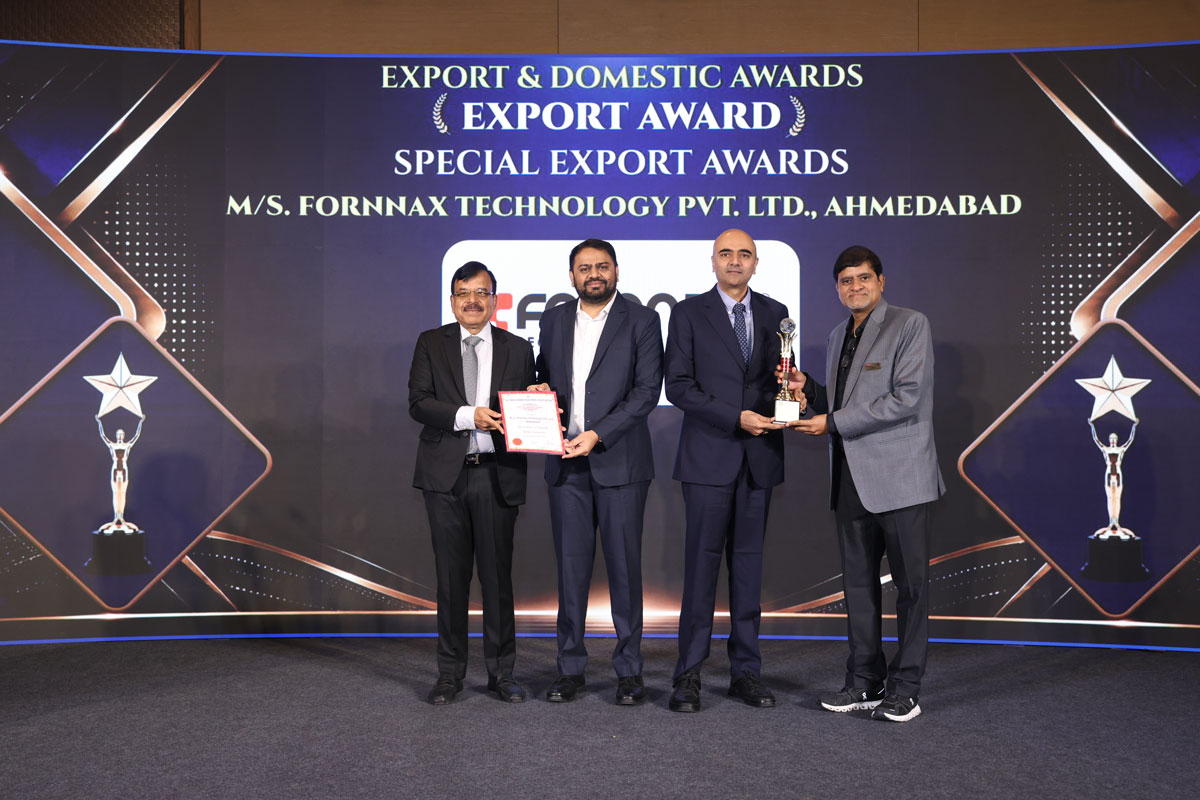
Fornnax Unveils the World’s Largest NPD and Demo Centre to Accelerate Global Recycling Innovation

Published

on

By

Shares

A 12-acre innovation campus enables Fornnax to design, test and validate high-performance recycling solutions at global standards in record time.

Fornnax has launched one of the world’s largest New Product Development (NPD) centres and demo plants, spanning more than 12 acres, marking a major step toward its vision of becoming a global recycling technology leader by 2030. Designed to accelerate real-world innovation, the facility will enable faster product design cycles, large-scale performance validation, and more reliable equipment for high-demand recycling applications.

At the core of the new campus is a live demo plant engineered to support application-specific testing. Fornnax will use this facility to upgrade its entire line of shredders and granulators—enhancing capacity, improving energy efficiency, and reducing downtime. With controlled test environments, machines can be validated for 3,000 to 15,000 hours of operation, ensuring real-world durability and high availability of 18–20 hours per day. This approach gives customers proven performance data before deployment.

“Innovation in product development is the key to becoming a global leader,” said Jignesh Kundariya, Director and CEO of Fornnax. “With this facility, we can design, test and validate new technologies in 6–8 months, compared to 4–5 years in a customer’s plant. Every machine will undergo rigorous Engineering Build (EB) and Manufacturing Build (MB) testing in line with international standards.”

Engineering Excellence Powered by Gate Review Methodology

Fornnax’s NPD framework follows a structured Gate Review Process, ensuring precision and discipline at every step. Projects begin with market research and ideation led by Sales and Marketing, followed by strategic review from the Leadership Team. Detailed engineering is then developed by the Design Team and evaluated by Manufacturing, Service and Safety before approval. A functional prototype is built and tested for 6–8 months, after which the design is optimised for mass production and commercial rollout.

Open-Door Customer Demonstration and Material Testing

The facility features an open-door demonstration model, allowing customers to bring their actual materials and test multiple machines under varied operating conditions. Clients can evaluate performance parameters, compare configurations and make informed purchasing decisions without operational risk.

The centre will also advance research into emerging sectors including E-waste, cables, lithium-ion batteries and niche heterogeneous waste streams. Highly qualified engineering and R&D teams will conduct feasibility studies and performance analysis to develop customised solutions for unfamiliar or challenging materials. This capability reinforces Fornnax’s reputation as a solution-oriented technology provider capable of solving real recycling problems.

Developing Global Recycling Talent

Beyond technology, the facility also houses a comprehensive OEM training centre. It will prepare operators and maintenance technicians for real-world plant conditions. Trainees will gain hands-on experience in assembly, disassembly and grinding operations before deployment at customer sites. Post-training, they will serve as skilled support professionals for Fornnax installations. The company will also deliver corporate training programs for international and domestic clients to enable optimal operation, swift troubleshooting and high-availability performance.

A Roadmap to Capture Global Demand

Fornnax plans to scale its offerings in response to high-growth verticals including Tyre recycling, Municipal Solid Waste (MSW), E-waste, Cable and Aluminium recycling. The company is also preparing solutions for new opportunities such as Auto Shredder Residue (ASR) and Lithium-Ion Battery recovery. With research, training, validation and customer engagement housed under one roof, Fornnax is laying the foundation for the next generation of recycling technologies.

“Our goal is to empower customers with clarity and confidence before they invest,” added Kundariya. “This facility allows them to test their own materials, compare equipment and see real performance. It’s not just about selling machines—it’s about building trust through transparency and delivering solutions that work.”

With this milestone, Fornnax reinforces its long-term commitment to enabling industries worldwide with proven, future-ready recycling solutions rooted in innovation, engineering discipline and customer collaboration.

Continue Reading

Concrete

Balancing Rapid Economic Growth and Climate Action

Published

on

By

Shares

Dr Yogendra Kanitkar, VP R&D, and Dr Shirish Kumar Sharma, Assistant Manager R&D, Pi Green Innovations, look at India’s cement industry as it stands at the crossroads of infrastructure expansion and urgent decarbonisation.

The cement industry plays an indispensable role in India’s infrastructure development and economic growth. As the world’s second-largest cement producer after China, India accounts for more than 8 per cent of global cement production, with an output of around 418 million tonnes in 2023–24. It contributes roughly 11 per cent to the input costs of the construction sector, sustains over one million direct jobs, and generates an estimated 20,000 additional downstream jobs for every million tonnes produced. This scale makes cement a critical backbone of the nation’s development. Yet, this vitality comes with a steep environmental price, as cement production contributes nearly 7 per cent of India’s total carbon dioxide (CO2) emissions.
On a global scale, the sector accounts for 8 per cent of anthropogenic CO2 emissions, a figure that underscores the urgency of balancing rapid growth with climate responsibility. A unique challenge lies in the dual nature of cement-related emissions: about 60 per cent stem from calcination of limestone in kilns, while the remaining 40 per cent arise from the combustion of fossil fuels to generate the extreme heat of 1,450°C required for clinker production (TERI 2023; GCCA).
This dilemma is compounded by India’s relatively low per capita consumption of cement at about 300kg per year, compared to the global average of 540kg. The data reveals substantial growth potential as India continues to urbanise and industrialise, yet this projected rise in consumption will inevitably add to greenhouse gas emissions unless urgent measures are taken. The sector is also uniquely constrained by being a high-volume, low-margin business with high capital intensity, leaving limited room to absorb additional costs for decarbonisation technologies.
India has nonetheless made notable progress in improving the carbon efficiency of its cement industry. Between 1996 and 2010, the sector reduced its emissions intensity from 1.12 tonnes of CO2 per ton of cement to 0.719 tonnes—making it one of the most energy-efficient globally. Today, Indian cement plants reach thermal efficiency levels of around 725 kcal/kg of clinker and electrical consumption near 75 kWh per tonne of cement, broadly in line with best global practice (World Cement 2025). However, absolute emissions continue to rise with increasing demand, with the sector emitting around 177 MtCO2 in 2023, about 6 per cent of India’s total fossil fuel and industrial emissions. Without decisive interventions, projections suggest that cement manufacturing emissions in India could rise by 250–500 per cent by mid-century, depending on demand growth (Statista; CEEW).
Recognising this threat, the Government of India has brought the sector under compliance obligations of the Carbon Credit Trading Scheme (CCTS). Cement is one of the designated obligated entities, tasked with meeting aggressive reduction targets over the next two financial years, effectively binding companies to measurable progress toward decarbonisation and creating compliance-driven demand for carbon reduction and trading credits (NITI 2025).
The industry has responded by deploying incremental decarbonisation measures focused on energy efficiency, alternative fuels, and material substitutions. Process optimisation using AI-driven controls and waste heat recovery systems has made many plants among the most efficient worldwide, typically reducing fuel use by 3–8 per cent and cutting emissions by up to 9 per cent. Trials are exploring kiln firing with greener fuels such as hydrogen and natural gas. Limited blends of hydrogen up to 20 per cent are technically feasible, though economics remain unfavourable at present.
Efforts to electrify kilns are gaining international attention. For instance, proprietary technologies have demonstrated the potential of electrified kilns that can reach 1,700°C using renewable electricity, a transformative technology still at the pilot stage. Meanwhile, given that cement manufacturing is also a highly power-intensive industry, several firms are shifting electric grinding operations to renewable energy.
Material substitution represents another key decarbonisation pathway. Blended cements using industrial by-products like fly ash and ground granulated blast furnace slag (GGBS) can significantly reduce the clinker factor, which currently constitutes about 65 per cent in India. GGBS can replace up to 85 per cent of clinker in specific cement grades, though its future availability may fall as steel plants decarbonise and reduce slag generation. Fly ash from coal-fired power stations remains widely used as a low-carbon substitute, but its supply too will shrink as India expands renewable power. Alternative fuels—ranging from biomass to solid waste—further allow reductions in fossil energy dependency, abating up to 24 per cent of emissions according to pilot projects (TERI; CEEW).
Beyond these, Carbon Capture, Utilisation, and Storage (CCUS) technologies are emerging as a critical lever for achieving deep emission cuts, particularly since process emissions are chemically unavoidable. Post-combustion amine scrubbing using solvents like monoethanolamine (MEA) remains the most mature option, with capture efficiencies between 90–99 per cent demonstrated at pilot scale. However, drawbacks include energy penalties that require 15–30 per cent of plant output for solvent regeneration, as well as costs for retrofitting and long-term corrosion management (Heidelberg Materials 2025). Oxyfuel combustion has been tested internationally, producing concentrated CO2-laden flue gas, though the high cost of pure oxygen production impedes deployment in India.
Calcium looping offers another promising pathway, where calcium oxide sorbents absorb CO2 and can be regenerated, but challenges of sorbent degradation and high calcination energy requirements remain barriers (DNV 2024). Experimental approaches like membrane separation and mineral carbonation are advancing in India, with startups piloting systems to mineralise flue gas streams at captive power plants. Besides point-source capture, innovations such as CO2 curing of concrete blocks already show promise, enhancing strength and reducing lifecycle emissions.
Despite progress, several systemic obstacles hinder the mass deployment of CCUS in India’s cement industry. Technology readiness remains a fundamental issue: apart from MEA-based capture, most technologies are not commercially mature in high-volume cement plants. Furthermore, CCUS is costly. Studies by CEEW estimate that achieving net-zero cement in India would require around US$ 334 billion in capital investments and US$ 3 billion annually in operating costs by 2050, potentially raising cement prices between 19–107 per cent. This is particularly problematic for an industry where companies frequently operate at capacity utilisations of only 65–70 per cent and remain locked in fierce price competition (SOIC; CEEW).
Building out transport and storage infrastructure compounds the difficulty, since many cement plants lie far from suitable geological CO2 storage sites. Moreover, retrofitting capture plants onto operational cement production lines adds technical integration struggles, as capture systems must function reliably under the high-particulate and high-temperature environment of cement kilns.
Overcoming these hurdles requires a multi-pronged approach rooted in policy, finance, and global cooperation. Policy support is vital to bridge the cost gap through instruments like production-linked incentives, preferential green cement procurement, tax credits, and carbon pricing mechanisms. Strategic planning to develop shared CO2 transport and storage infrastructure, ideally in industrial clusters, would significantly lower costs and risks. International coordination can also accelerate adoption.
The Global Cement and Concrete Association’s net-zero roadmap provides a collaborative template, while North–South technology transfer offers developing countries access to proven technologies. Financing mechanisms such as blended finance, green bonds tailored for cement decarbonisation and multilateral risk guarantees will reduce capital barriers.
An integrated value-chain approach will be critical. Coordinated development of industrial clusters allows multiple emitters—cement, steel, and chemicals—to share common CO2 infrastructure, enabling economies of scale and lowering unit capture costs. Public–private partnerships can further pool resources to build this ecosystem. Ultimately, decarbonisation is neither optional nor niche for Indian cement. It is an imperative driven by India’s growth trajectory, environmental sustainability commitments, and changing global markets where carbon intensity will define trade competitiveness.
With compliance obligations already mandated under CCTS, the cement industry must accelerate decarbonisation rapidly over the next two years to meet binding reduction targets. The challenge is to balance industrial development with ambitious climate goals, securing both economic resilience and ecological sustainability. The pathway forward depends on decisive governmental support, cross-sectoral innovation, global solidarity, and forward-looking corporate action. The industry’s future lies in reframing decarbonisation not as a burden but as an investment in competitiveness, climate alignment and social responsibility.

References

  • Infomerics, “Indian Cement Industry Outlook 2024,” Nov 2024.
  • TERI & GCCA India, “Decarbonisation Roadmap for the Indian Cement Industry,” 2023.
  • UN Press Release, GA/EF/3516, “Global Resource Efficiency and Cement.”
  • World Cement, “India in Focus: Energy Efficiency Gains,” 2025.
  • Statista, “CO2 Emissions from Cement Manufacturing 2023.”
  • Heidelberg Materials, Press Release, June 18, 2025.
  • CaptureMap, “Cement Carbon Capture Technologies,” 2024.
  • DNV, “Emerging Carbon Capture Techniques in Cement Plants,” 2024.
  • LEILAC Project, News Releases, 2024–25.
  • PMC (NCBI), “Membrane-Based CO2 Capture in Cement Plants,” 2024.
  • Nature, “Carbon Capture Utilization in Cement and Concrete,” 2024.
  • ACS Industrial Engineering & Chemistry Research, “CCUS Integration in Cement Plants,” 2024.
  • CEEW, “How Can India Decarbonise for a Net-Zero Cement Industry?” (2025).
  • SOIC, “India’s Cement Industry Growth Story,” 2025.
  • MDPI, “Processes: Challenges for CCUS Deployment in Cement,” 2024.
  • NITI Aayog, “CCUS in Indian Cement Sector: Policy Gaps & Way Forward,” 2025.

ABOUT THE AUTHOR:
Dr Yogendra Kanitkar, Vice President R&D, Pi Green Innovations, drives sustainable change through advanced CCUS technologies and its pioneering NetZero Machine, delivering real decarbonisation solutions for hard-to-abate sectors.

Dr Shirish Kumar Sharma, Assitant Manager R&D, Pi Green Innovations, specialises in carbon capture, clean energy, and sustainable technologies to advance impactful CO2 reduction solutions.

Continue Reading

Concrete

Carbon Capture Systems

Published

on

By

Shares

Nathan Ashcroft, Director, Strategic Growth, Business Development, and Low Carbon Solutions – Stantec, explores the challenges and strategic considerations for cement industry as it strides towards Net Zero goals.

The cement industry does not need a reminder that it is among the most carbon-intensive sectors in the world. Roughly 7–8 per cent of global carbon dioxide (CO2) emissions are tied to cement production. And unlike many other heavy industries, a large share of these emissions come not from fuel but from the process itself: the calcination of limestone. Efficiency gains, fuel switching, and renewable energy integration can reduce part of the footprint. But they cannot eliminate process emissions.
This is why carbon capture and storage (CCS) has become central to every serious discussion
about cement’s pathway to Net Zero. The industry already understands and accepts this challenge.
The debate is no longer whether CCS will be required—it is about how fast, affordable, and seamlessly it can be integrated into facilities that were never designed for it.

In many ways, CCS represents the ‘last mile’of cement decarbonisation. Once the sector achieves effective capture at scale, the most difficult part of its emissions profile will have been addressed. But getting there requires navigating a complex mix of technical, operational, financial and regulatory considerations.

A unique challenge for cement
Cement plants are built for durability and efficiency, not for future retrofits. Most were not designed with spare land for absorbers, ducting or compression units. Nor with the energy integration needs of capture systems in mind. Retrofitting CCS into these existing layouts presents a series of non-trivial challenges.
Reliability also weighs heavily in the discussion. Cement production runs continuously, and any disruption has significant economic consequences. A CCS retrofit typically requires tie-ins to stacks and gas flows that can only be completed during planned shutdowns. Even once operational, the capture system must demonstrate high availability. Otherwise, producers may face the dual cost of capture downtime and exposure to carbon taxes or penalties, depending on jurisdiction.
Despite these hurdles, cement may actually be better positioned than some other sectors. Flue gas from cement kilns typically has higher CO2 concentrations than gas-fired power plants, which improves capture efficiency. Plants also generate significant waste heat, which can be harnessed to offset the energy requirements of capture units. These advantages give the industry reason to be optimistic, provided integration strategies are carefully planned.

From acceptance to implementation
The cement sector has already acknowledged the inevitability of CCS. The next step is to turn acceptance into a roadmap for action. This involves a shift from general alignment around ‘the need’ toward project-level decisions about technology, layout, partnerships and financing.
The critical questions are no longer about chemistry or capture efficiency. They are about the following:

  • Space and footprint: Where can capture units be located? And how can ducting be routed in crowded plants?
  • Energy balance: How can capture loads be integrated without eroding plant efficiency?
  • Downtime and risk: How will retrofits be staged to avoid prolonged shutdowns?
  • Financing and incentives: How will capital-intensive projects be funded in a sector with
    tight margins?
  • Policy certainty: Will governments provide the clarity and support needed for long-term investment
  • Technology advancement: What are the latest developments?
  • All of these considerations are now shaping the global CCS conversation in cement.

Economics: The central barrier
No discussion of CCS in the cement industry is complete without addressing cost. Capture systems are capital-intensive, with absorbers, regenerators, compressors, and associated balance-of-plant representing a significant investment. Operational costs are dominated by energy consumption, which adds further pressure in competitive markets.
For many producers, the economics may seem prohibitive. But the financial landscape is changing rapidly. Carbon pricing is becoming more widespread and will surely only increase in the future. This makes ‘doing nothing’ an increasingly expensive option. Government incentives—ranging from investment tax credits in North America to direct funding in Europe—are accelerating project viability. Some producers are exploring CO2 utilisation, whether in building materials, synthetic fuels, or industrial applications, as a way to offset costs. This is an area we will see significantly more work in the future.
Perhaps most importantly, the cost of CCS itself is coming down. Advances in novel technologies, solvents, modular system design, and integration strategies are reducing both capital requirements
and operating expenditures. What was once prohibitively expensive is now moving into the range of strategic possibility.
The regulatory and social dimension
CCS is not just a technical or financial challenge. It is also a regulatory and social one. Permitting requirements for capture units, pipelines, and storage sites are complex and vary by jurisdiction. Long-term monitoring obligations also add additional layers of responsibility.
Public trust also matters. Communities near storage sites or pipelines must be confident in the safety and environmental integrity of the system. The cement industry has the advantage of being widely recognised as a provider of essential infrastructure. If producers take a proactive role in transparent engagement and communication, they can help build public acceptance for CCS
more broadly.

Why now is different
The cement industry has seen waves of technology enthusiasm before. Some have matured, while others have faded. What makes CCS different today? The convergence of three forces:
1. Policy pressure: Net Zero commitments and tightening regulations are making CCS less of an option and more of an imperative.
2. Technology maturity: First-generation projects in power and chemicals have provided valuable lessons, reducing risks for new entrants.
3. Cost trajectory: Capture units are becoming smaller, smarter, and more affordable, while infrastructure investment is beginning to scale.
This convergence means CCS is shifting from concept to execution. Globally, projects are moving from pilot to commercial scale, and cement is poised to be among the beneficiaries of this momentum.

A global perspective
Our teams at Stantec recently completed a global scan of CCS technologies, and the findings are encouraging. Across solvents, membranes, and
hybrid systems, innovation pipelines are robust. Modular systems with reduced footprints are
emerging, specifically designed to make retrofits more practical.
Equally important, CCS hubs—where multiple emitters can share transport and storage infrastructure—are beginning to take shape in key regions. These hubs reduce costs, de-risk storage, and provide cement producers with practical pathways to integration.

The path forward
The cement industry has already accepted the challenge of carbon capture. What remains is charting a clear path to implementation. The barriers—space, cost, downtime, policy—are real. But they are not insurmountable. With costs trending downward, technology footprints shrinking, and policy support expanding, CCS is no longer a distant aspiration.
For cement producers, the decision is increasingly about timing and positioning. Those who move early can potentially secure advantages in incentives, stakeholder confidence, and long-term competitiveness. Those who delay may face higher costs and tighter compliance pressures.
Ultimately, the message is clear: CCS is coming to cement. The question is not if but how soon. And once it is integrated, the industry’s biggest challenge—process emissions—will finally have a solution.

ABOUT THE AUTHOR:
Nathan Ashcroft, Director, Strategic Growth, Business Development, and Low Carbon Solutions – Stantec, holds expertise in project management, strategy, energy transition, and extensive international leadership experience.

Continue Reading

Trending News