Economy & Market
In Wonder Land
Published
11 years agoon
By
admin
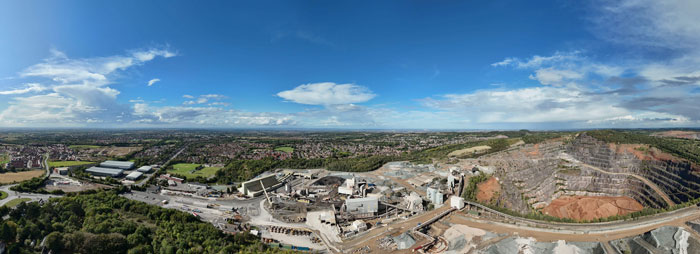
RK Marble Group transformed Bhatkotri, a small village in Nimbahera, Rajasthan, into a township along with its modern cement plant that was set up in 2012. ICR visited this Wonder Cement facility to understand the specialities of the plant and infrastructure.
Part of the RK Marble Group, Wonder Cement is a greenfield project, a fully automated plant with world-class technology, anchored by a group of experienced entrepreneurs from the house of the Patnis, better known as the marble family in the country. Built with a cutting – edge technology, this state-of-the-art project has made its footprint in the burgeoning market of cement industry in the country within a short span of three years. It is the only plant in North India and among the few in India which is fully automated with the latest world-class technology from ThyssenKrupp and Pfeiffer, a German technology major.
The project was commissioned in April 2012 with an installed capacity of 3.25 million tonne per annum (mtpa) of cement. "This plant was conceptualised in 2010 and built in record time of 18 months, whereas normal period to construct similar plant, according to consultants and major companies, is 28-32 months. We completed the project in 18 months for clinkerisation and 21 months for cement production," says SM Joshi, President – Works, Wonder Cement.
A futuristic plant
Wonder Cement is a plant of 21st century, fully automated with the latest German technology and quality control by Automated Po-Lab (Robotic Lab) with AQCNET Software. The plant is centrally controlled and there are various technological features which are hallmarks of the latest technical developments.
There are various other features which are the hallmarks of the latest technology in the international market. Raw material acquisition and refining, considered to be the most important stages in cement production, are carried out by VRM technology, supplied and installed by Pfeiffer while equipment for processing and clinker grinding has been done by ThyssenKrukpp. Latest packaging technology has been also installed at the plant. Other auxiliary equipment have been sourced from the best vendors in the industry.
"When the plant was being coneptualised, our Chairman wanted to give the best product out of the facility. Therefore we selected machinery from ThyssenKrupp and Pfeiffer, Germany," Joshi explains.
Vivek Patni, Director, Wonder Cement, says, "When we were conceptualising this plant, we kept all provisions for modernisation and future expansions. Our infrastructure is suitable for supporting additional capacity. While planning the infrastructure, we were having consultants for architecture and landscaping. You can see the results here. We have very well planned buildings, roads, and landscaping which is difficult to find in other cement manufacturing facilities.
Raw materials mining
Wonder Cement has an installed capacity of 3.25 mtpa of cement, for which 3.75 mtpa ROM (Run-Of-Mine) limestone is required. The company has two mining leases known as Bhatkotari lime stone mines. The total area of mines is 7.4093 sq km. In the mines, there are more than 506 million tonne proved reserves and more than 25 million tonne probable reserves. The total mineable reserves are more than 477 million tonne. Open cast mining is done in both the mines. Chittorgarh area in Rajasthan is known for its superior quality lime stone deposits, possessing high lime content that gives high early strength and ultimate long term strength. Another characteristic feature of this lime stone is low alkali, low magnesia and low chloride contents which are highly desirable parameters for concrete durability.
Crushing and screening
ROM up to maximum feed size of 1.1×1.0x1.0 cu m is dumped in crusher dump hopper. Speed regulated apron conveyor below the dump hopper feed this material to grizzly feeder. The -80 mm material goes to the screening plant and +80 mm material is fed to impactor having the capacity of 1,600 tph. Impactor reduces the size to 75 mm. In screening plant, -10 mm material (mainly containing clay) is separated and rejected. Rest +10 mm material is again mixed with crusher main product. This mixed material is stored in surge bin. From surge bin, this material is fed to limestone stacker through apron conveyor and belt conveyors. For better blending, the material is stacked in layers in yard with the help of stacker. Pile formation takes place in Chevron method. And online quality control by cross belt analyser, which is the world?s best Combi CBA having CNA technology also, which is introduced in India for the first time. Approximately 93-95 per cent of materials, limestone and marl, is used from captive mines for the preparation of raw mix for manufacturing the desired quality of clinker. The other additives (5-7 per cent) used after pre-blending by stacker and reclaimer to control the moduli values in the mix. To get consistent quality of in process material, pre-blending equipment are installed for each raw material.
Raw material grinding
The state-of-the-art technology adopted at the plant consists of vertical roller mill of Pfeiffer, Germany, for grinding raw material to achieve the optimum fineness, and controlled particle size distribution of raw material particles. The capacity of the raw mill is 550 tph. After the complete process, the finely ground raw material is collected in a set of cyclones installed after the mill. Through air slides below multicones, the product is transported to silo with the help of elevator. The dust-laden air after multiclones is de-dusted in the bag house.
Coal grinding
For grinding of petcoke/coal, again there is a vertical roller mill having capacity of 35 tph. The operation of this mill is same as in the raw mill. The only difference is to have a constant watch over the mill outlet temperature to avoid any explosion and dust laden gases are de-dusted in bag house.
Pyro processing
Wonder Cement plant has a 75 m long kiln having diameter of 5 m for manufacturing OPC clinker supplied by Polysius ThyssenKrupp. The clinker is produced by burning the finely ground raw meal known as kiln feed in a rotary kiln. The temperature in the burning zone is usually 1,400-1,450oC and the residence time in the kiln is 15 minute. The process taking place in the kiln system consist of a temperature dependent decomposition of the raw material minerals according to the nature, followed by a recombination of the liberated free reactive oxides forming clinker minerals. The overall chemical reactions transforming the mixture of raw material minerals in the raw meal to the mixture of the clinker minerals in the clinker is endothermic (heat consuming). The clinker formed in kiln is cooled inside the polytrack cooler from 1,450oC to around 110oC and then it is stored in clinker silo having a storage capacity of 45,000 tonne.
Cement grinding
The final manufacturing stage at a cement plant is the grinding of cement clinker from the kiln, mixed with gypsum, into a fine powder.
It is important to obtain a certain specific surface for the finished cement so that hydration can take place and concrete strength develops within a reasonable time. In addition to the specific surface, also the particle size distribution influences the strength properties especially the late strength. At WCL, cement grinding circuit is having roll press with closed circuit single chamber ball mill.
At the outlet of the grinding mill, the ground material flows through an outlet grate to dynamic separator by mechanical conveyors, for fine separation as grinding system is closed circuit mill. Grinding in close circuit makes it possible to obtain a very finely ground cement. Another advantage is that it is easy to change from one grade of cement to another grade by adjustment of the separator speed. Cement produced in closed circuit mill has narrow particle size range and the quantity of 3 to 30 micron fraction is more in comparison to open circuit mill, resulting in higher late strength. The mill ventilation air carries a small portion of the fine material, which is de-dusted in a highly efficient bag-house. Finished product with separator air is passed through multi-clones where finished product is separated and stored in cement silos with the help of mechanical conveyors.
Cement packaging
Cement is stored in four cement silos, extracted, bagged by three electronic roto packers of capacity 240 tph each with an accuracy of +50 gm and -0 gm, and transported by trucks.
Quality product
Wonder Cement produces three grades of cement: OPC 43, 53 and PPC. Joshi claims, "We produce much higher strength cement than what is required by BIS. Our 53 grade cement is giving a strength of 68-70 Mpa against a requirement of 53 Mpa. The 53 Mpa strength is required after 28 days of setting time. Our cement crosses 53 Mpa in eight days and reaches 68-70 Mpa in 28 days. This type of performance is not available in any other cement in India. This is achieved due to very narrow and uniform particle size distribution of our cement and exceptionally good quality control system."
The market
The present capacity of the plant is 3.25 million tonne per annum (1,80,000 bags per day). The company has a wide network of 2,500 dealers who keep and maintain the supply chain in Rajasthan, Gujarat, Madhya Pradesh, Haryana, Uttar Pradesh, Delhi and Punjab. The company has a team of over 500 dedicated professionals. "We sell 50 per cent of our production in Rajasthan itself. Remaining 50 per cent is sold in the other states adjoining Rajasthan. Right now we are focusing on in and around Rajasthan because the best realisation is available at shortest distance. If you start sending cement to longer distances the realisation will be less," observes Patni.
Captive power
To ensure uninterrupted power supply to its plant in Nimbahera, the company has installed a captive power plan of 40 MW. The power plant uses petcoke as fuel sourced from IOC?s Baroda plant and Jamnagar refineries of Essar and Reliance. "We always use petcock as fuel for our power plant which is economical. In this area it is almost 25-30 per cent cheaper compared to other fuels," Joshi informs.
Keen on Green
The plant has complied with the norms of the environment ministry. The entire design of the plant is based on the latest environment norms, with the help of reverse air bag house and ESP and a number of nuisance bag filters installed having emission of much below the permissible unit. That enables the plant to be clean and dust free. An ecological balance has been maintained through massive plantation and development of ornamental gardens in the areas around the plant site. A fair measure of company?s concern on environmental issue is seen in the plantation of 55,000 tree saplings in 50 hectare in two years against a target of 75 hectare in 20 years.
Expansion plans
Wonder Cement has drawn up an ambitious expansion plan to double the production capacity in the next two years. The company has plans to expand its current capacity to 10 million tonne in due course by setting up a second and third production lines, for which land and layouts are ready. "Our second line is under execution with an expenditure of about Rs 1,200-1,400 crore. It will be ready by end of 2015," Joshi sums it up.
You may like
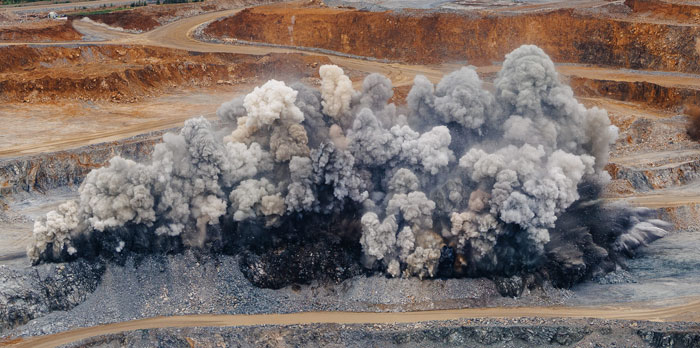
SEEPEX introduces BN pumps with Smart Joint Access (SJA) to improve efficiency, reliability, and inspection speed in demanding rock blasting operations.
Designed for abrasive and chemical media, the solution supports precise dosing, reduced downtime, and enhanced operational safety.
SEEPEX has introduced BN pumps with Smart Joint Access (SJA), engineered for the reliable and precise transfer of abrasive, corrosive, and chemical media in mining and construction. Designed for rock blasting, the pump features a large inspection opening for quick joint checks, a compact footprint for mobile or skid-mounted installations, and flexible drive and material options for consistent performance and uptime.

“Operators can inspect joints quickly and rely on precise pumping of shear-sensitive and abrasive emulsions,” said Magalie Levray, Global Business Development Manager Mining at SEEPEX. “This is particularly critical in rock blasting, where every borehole counts for productivity.” Industry Context
Rock blasting is essential for extracting hard rock and shaping safe excavation profiles in mining and construction. Accurate and consistent loading of explosive emulsions ensures controlled fragmentation, protects personnel, and maximizes productivity. Even minor deviations in pumping can cause delays or reduce product quality. BN pumps with SJA support routine maintenance and pre-operation checks by allowing fast verification of joint integrity, enabling more efficient operations.
Always Inspection Ready
Smart Joint Access is designed for inspection-friendly operations. The large inspection opening in the suction housing provides direct access to both joints, enabling rapid pre-operation checks while maintaining high operational reliability. Technicians can assess joint condition quickly, supporting continuous, reliable operation.
Key Features
- Compact Footprint: Fits truck-mounted mobile units, skid-mounted systems, and factory installations.
- Flexible Drive Options: Compact hydraulic drive or electric drive configurations.
- Hydraulic Efficiency: Low-displacement design reduces oil requirements and supports low total cost of ownership.
- Equal Wall Stator Design: Ensures high-pressure performance in a compact footprint.
- Material Flexibility: Stainless steel or steel housings, chrome-plated rotors, and stators in NBR, EPDM, or FKM.
Operators benefit from shorter inspection cycles, reliable dosing, seamless integration, and fast delivery through framework agreements, helping to maintain uptime in critical rock blasting processes.
Applications – Optimized for Rock Blasting
BN pumps with SJA are designed for mining, tunneling, quarrying, civil works, dam construction, and other sectors requiring precise handling of abrasive or chemical media. They provide robust performance while enabling fast, reliable inspection and maintenance.With SJA, operators can quickly access both joints without disassembly, ensuring emulsions are transferred accurately and consistently. This reduces downtime, preserves product integrity, and supports uniform dosing across multiple bore holes.
With the Smart Joint Access inspection opening, operators can quickly access and assess the condition of both joints without disassembly, enabling immediate verification of pump readiness prior to blast hole loading. This allows operators to confirm that emulsions are transferred accurately and consistently, protecting personnel, minimizing product degradation, and maintaining uniform dosing across multiple bore holes.
The combination of equal wall stator design, compact integration, flexible drives, and progressive cavity pump technology ensures continuous, reliable operation even in space-limited, high-pressure environments.
From Inspection to Operation
A leading explosives provider implemented BN pumps with SJA in open pit and underground operations. By replacing legacy pumps, inspection cycles were significantly shortened, allowing crews to complete pre-operation checks and return mobile units to productive work faster. Direct joint access through SJA enabled immediate verification, consistent emulsion dosing, and reduced downtime caused by joint-related deviations.
“The inspection opening gives immediate confidence that each joint is secure before proceeding to bore holes,” said a site technician. “It allows us to act quickly, keeping blasting schedules on track.”
Framework agreements ensured rapid pump supply and minimal downtime, supporting multi-site operations across continents
Concrete
Digital process control is transforming grinding
Published
3 weeks agoon
February 20, 2026By
admin
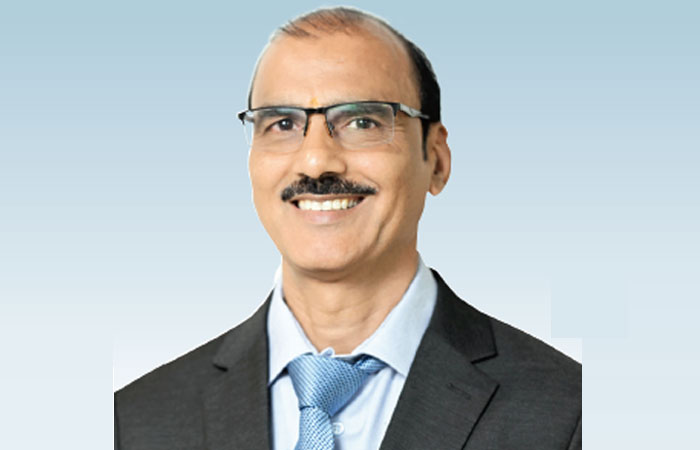
Satish Maheshwari, Chief Manufacturing Officer, Shree Cement, delves into how digital intelligence is transforming cement grinding into a predictive, stable, and energy-efficient operation.
Grinding sits at the heart of cement manufacturing, accounting for the largest share of electrical energy consumption. In this interview, Satish Maheshwari, Chief Manufacturing Officer, Shree Cement, explains how advanced grinding technologies, data-driven optimisation and process intelligence are transforming mill performance, reducing power consumption and supporting the industry’s decarbonisation goals.
How has the grinding process evolved in Indian cement plants to meet rising efficiency and sustainability expectations?
Over the past decade, Indian cement plants have seen a clear evolution in grinding technology, moving from conventional open-circuit ball mills to high-efficiency closed-circuit systems, Roller Press–Ball Mill combinations and Vertical Roller Mills (VRMs). This shift has been supported by advances in separator design, improved wear-resistant materials, and the growing use of digital process automation. As a result, grinding units today operate as highly controlled manufacturing systems where real-time data, process intelligence and efficient separation work together to deliver stable and predictable performance.
From a sustainability perspective, these developments directly reduce specific power consumption, improve equipment reliability and lower the carbon footprint per tonne of cement produced.
How critical is grinding optimisation in reducing specific power consumption across ball mills and VRMs?
Grinding is the largest consumer of electrical energy in a cement plant, which makes optimisation one of the most effective levers for improving energy efficiency. In ball mill systems, optimisation through correct media selection, charge design, diaphragm configuration, ventilation management and separator tuning can typically deliver power savings of 5 per cent to 8 per cent. In VRMs, fine-tuning airflow balance, grinding pressure, nozzle ring settings, and circulating load can unlock energy reductions in the range of 8 per cent to 12 per cent. Across both systems, sustained operation under stable conditions is critical. Consistency in mill loading and operating parameters improves quality control, reduces wear, and enables long-term energy efficiency, making stability a key operational KPI.
What challenges arise in maintaining consistent cement quality when using alternative raw materials and blended compositions?
The increased use of alternative raw materials and supplementary cementitious materials (SCM) introduces variability in chemistry, moisture, hardness, and loss on ignition. This variability makes it more challenging to maintain consistent fineness, particle size distribution, throughput and downstream performance parameters such as setting time, strength development and workability.
As clinker substitution levels rise, grinding precision becomes increasingly important. Even small improvements in consistency enable higher SCM utilisation without compromising cement performance.
Addressing these challenges requires stronger feed homogenisation, real-time quality monitoring and dynamic adjustment of grinding parameters so that output quality remains stable despite changing input characteristics.
How is digital process control changing the way grinding performance is optimised?
Digital process control is transforming grinding from an operator-dependent activity into a predictive, model-driven operation. Technologies such as online particle size and residue analysers, AI-based optimisation platforms, digital twins for VRMs and Roller Press systems, and advanced process control solutions are redefining how performance is managed.
At the same time, workforce roles are evolving. Operators are increasingly focused on interpreting data trends through digital dashboards and responding proactively rather than relying on manual interventions. Together, these tools improve mill stability, enable faster response to disturbances, maintain consistent fineness, and reduce specific energy consumption while minimising manual effort.
How do you see grinding technologies supporting the industry’s low-clinker and decarbonisation goals?
Modern grinding technologies are central to the industry’s decarbonisation efforts. They enable higher incorporation of SCMs such as fly ash, slag, and limestone, improve particle fineness and reactivity, and reduce overall power consumption. Efficient grinding makes it possible to maintain consistent cement quality at lower clinker factors. Every improvement in energy intensity and particle engineering directly contributes to lower CO2 emissions.
As India moves toward low-carbon construction, precision grinding will remain a foundational capability for delivering sustainable, high-performance cement aligned with national and global climate objectives.
How much potential does grinding optimisation hold for immediate energy
and cost savings?
The potential for near-term savings is substantial. Without major capital investment, most plants can achieve 5 per cent to 15 per cent power reduction through measures such as improving separator efficiency, optimising ventilation, refining media grading, and fine-tuning operating parameters.
With continued capacity expansion across India, advanced optimisation tools will help ensure that productivity gains are not matched by proportional increases in energy demand. Given current power costs, this translates into direct and measurable financial benefits, making grinding optimisation one of the fastest-payback operational initiatives available to cement manufacturers today.
Concrete
Refractory demands in our kiln have changed
Published
3 weeks agoon
February 20, 2026By
admin
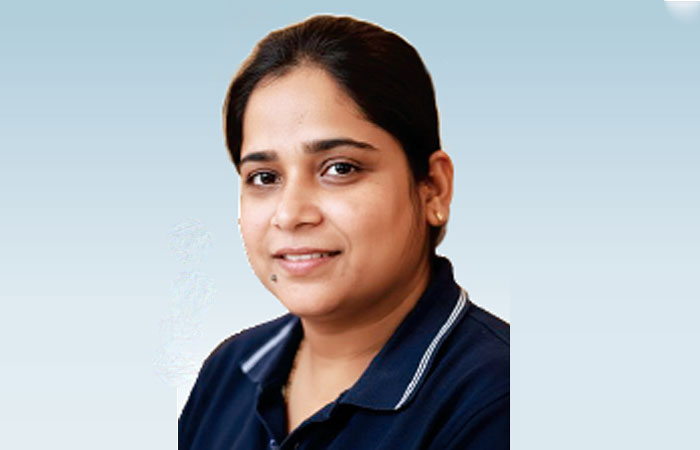
Radha Singh, Senior Manager (P&Q), Shree Digvijay Cement, points out why performance, predictability and life-cycle value now matter more than routine replacement in cement kilns.
As Indian cement plants push for higher throughput, increased alternative fuel usage and tighter shutdown cycles, refractory performance in kilns and pyro-processing systems is under growing pressure. In this interview, Radha Singh, Senior Manager (P&Q), Shree Digvijay Cement, shares how refractory demands have evolved on the ground and how smarter digital monitoring is improving kiln stability, uptime and clinker quality.
How have refractory demands changed in your kiln and pyro-processing line over the last five years?
Over the last five years, refractory demands in our kiln and pyro line have changed. Earlier, the focus was mostly on standard grades and routine shutdown-based replacement. But now, because of higher production loads, more alternative fuels and raw materials (AFR) usage and greater temperature variation, the expectation from refractory has increased.
In our own case, the current kiln refractory has already completed around 1.5 years, which itself shows how much more we now rely on materials that can handle thermal shock, alkali attack and coating fluctuations. We have moved towards more stable, high-performance linings so that we don’t have to enter the kiln frequently for repairs.
Overall, the shift has been from just ‘installation and run’ to selecting refractories that give longer life, better coating behaviour and more predictable performance under tougher operating conditions.
What are the biggest refractory challenges in the preheater, calciner and cooler zones?
• Preheater: Coating instability, chloride/sulphur cycles and brick erosion.
• Calciner: AFR firing, thermal shock and alkali infiltration.
• Cooler: Severe abrasion, red-river formation and mechanical stress on linings.
Overall, the biggest challenge is maintaining lining stability under highly variable operating conditions.
How do you evaluate and select refractory partners for long-term performance?
In real plant conditions, we don’t select a refractory partner just by looking at price. First, we see their past performance in similar kilns and whether their material has actually survived our operating conditions. We also check how strong their technical support is during shutdowns, because installation quality matters as much as the material itself.
Another key point is how quickly they respond during breakdowns or hot spots. A good partner should be available on short notice. We also look at their failure analysis capability, whether they can explain why a lining failed and suggest improvements.
On top of this, we review the life they delivered in the last few campaigns, their supply reliability and their willingness to offer plant-specific custom solutions instead of generic grades. Only a partner who supports us throughout the life cycle, which includes selection, installation, monitoring and post-failure analysis, fits our long-term requirement.
Can you share a recent example where better refractory selection improved uptime or clinker quality?
Recently, we upgraded to a high-abrasion basic brick at the kiln outlet. Earlier we had frequent chipping and coating loss. With the new lining, thermal stability improved and the coating became much more stable. As a result, our shutdown interval increased and clinker quality remained more consistent. It had a direct impact on our uptime.
How is increased AFR use affecting refractory behaviour?
Increased AFR use is definitely putting more stress on the refractory. The biggest issue we see daily is the rise in chlorine, alkalis and volatiles, which directly attack the lining, especially in the calciner and kiln inlet. AFR firing is also not as stable as conventional fuel, so we face frequent temperature fluctuations, which cause more thermal shock and small cracks in the lining.
Another real problem is coating instability. Some days the coating builds too fast, other days it suddenly drops, and both conditions impact refractory life. We also notice more dust circulation and buildup inside the calciner whenever the AFR mix changes, which again increases erosion.
Because of these practical issues, we have started relying more on alkali-resistant, low-porosity and better thermal shock–resistant materials to handle the additional stress coming from AFR.
What role does digital monitoring or thermal profiling play in your refractory strategy?
Digital tools like kiln shell scanners, IR imaging and thermal profiling help us detect weakening areas much earlier. This reduces unplanned shutdowns, helps identify hotspots accurately and allows us to replace only the critical sections. Overall, our maintenance has shifted from reactive to predictive, improving lining life significantly.
How do you balance cost, durability and installation speed during refractory shutdowns?
We focus on three points:
• Material quality that suits our thermal profile and chemistry.
• Installation speed, in fast turnarounds, we prefer monolithic.
• Life-cycle cost—the cheapest material is not the most economical. We look at durability, future downtime and total cost of ownership.
This balance ensures reliable performance without unnecessary expenditure.
What refractory or pyro-processing innovations could transform Indian cement operations?
Some promising developments include:
• High-performance, low-porosity and nano-bonded refractories
• Precast modular linings to drastically reduce shutdown time
• AI-driven kiln thermal analytics
• Advanced coating management solutions
• More AFR-compatible refractory mixes
These innovations can significantly improve kiln stability, efficiency and maintenance planning across the industry.
NDMC Rolls Out Intensive Sanitation Drive Across Lutyens Delhi
UltraTech Appoints Jayant Dua As MD-Designate For 2027
Merlin Prime Spaces Acquires 13,185 Sq M Land Parcel In Pune
Adani Cement and Naredco Partner to Promote Sustainable Construction
Operational Excellence Redefined!
NDMC Rolls Out Intensive Sanitation Drive Across Lutyens Delhi
UltraTech Appoints Jayant Dua As MD-Designate For 2027
Merlin Prime Spaces Acquires 13,185 Sq M Land Parcel In Pune
Adani Cement and Naredco Partner to Promote Sustainable Construction